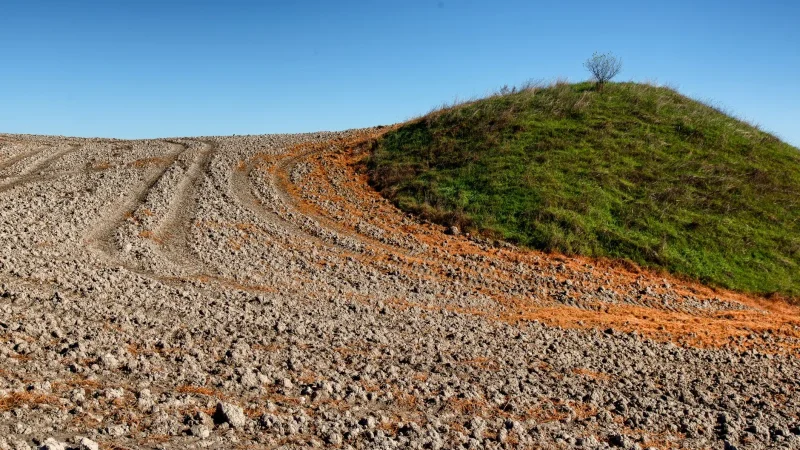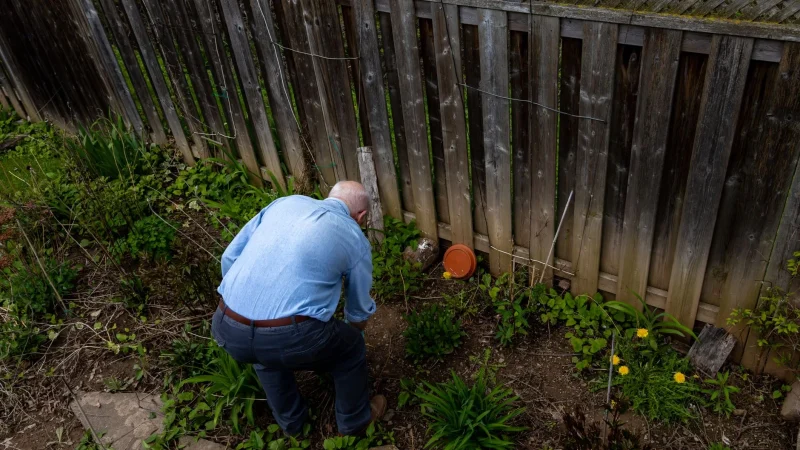

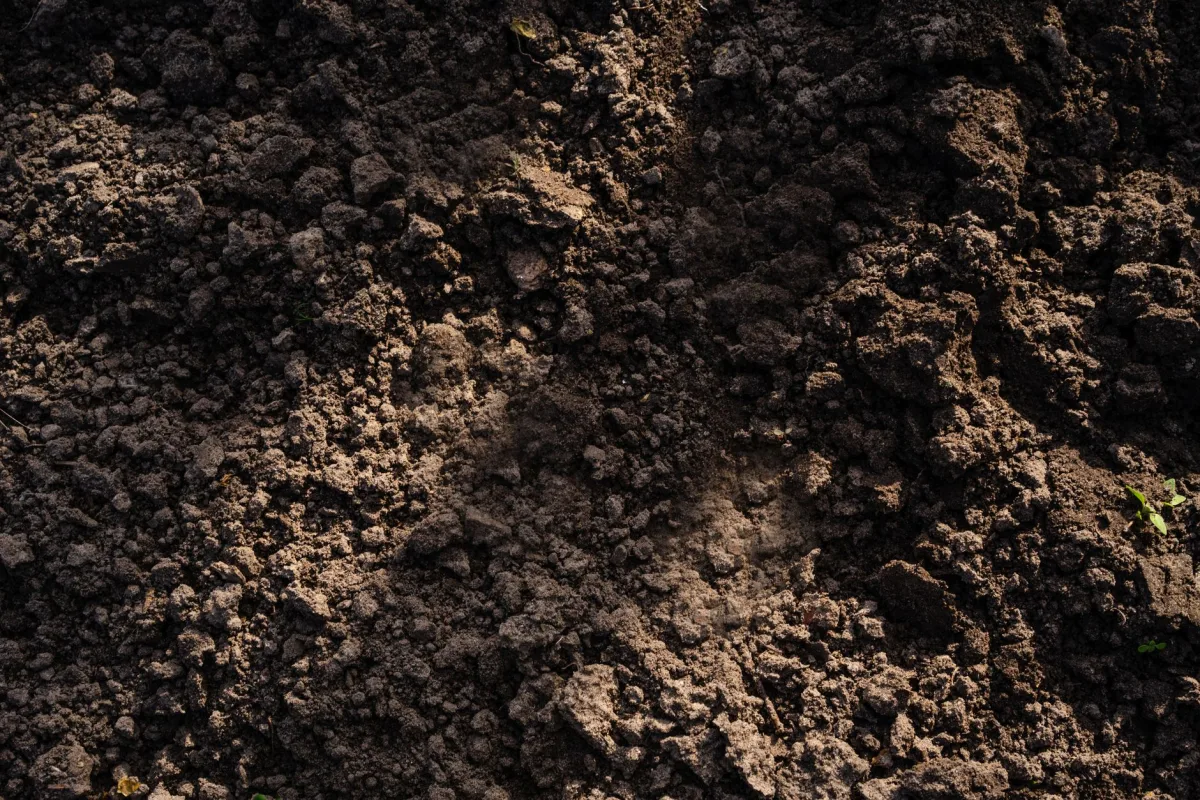
Dig into the soil under a working drain field and you will not find anything dramatic: just gravel, pipe, and dirt. Yet a few inches below each pipe sits a thin, dark, slimy layer that quietly does most of the real cleaning. Septic pros call it the biomat. It is both the reason your field treats wastewater so well and the reason every field eventually wears out.
Knowing how this layer works clears up a lot of confusion about why fields fail and why no poured-in product magically fixes a tired one. Here it is in plain terms.
Key Takeaways
- The septic drain field biomat is a thin bacterial layer that forms where effluent from the tank meets the soil at the bottom and sides of the trenches.
- It is not a defect. That same living layer is what actually filters and treats the wastewater before it reaches groundwater.
- Trouble starts when the biomat grows too thick and seals the soil so water can no longer pass through, which is how most fields fail.
- Too much water, solids, grease, and harsh chemicals all thicken the mat faster than nature can balance it.
- No additive reliably dissolves biomat. Resting the field and fixing the source of overload are the dependable fixes.
What Drain Field Biomat Actually Is
Effluent, the cloudy liquid that leaves your septic tank, is not clean water. It still carries dissolved waste, bacteria, and fine particles the tank could not settle out. When that effluent trickles into the gravel and soil of your drain field, bacteria already living in the ground go to work on it.
Over weeks and months, those bacteria build up into a dense, dark, jelly-like mat along the surfaces where effluent meets soil. That mat is the biomat. You will find it mainly along the bottom of each trench and a few inches up the sidewalls, right where the wastewater soaks in.
It is usually black or dark gray, slimy to the touch, and somewhere between a fraction of an inch and an inch or two thick in a healthy field. If you have never seen your own field opened up, that is normal. The biomat lives well out of sight. If the layout of trenches and gravel is new to you, our primer on what a leach field is and how it treats water covers the parts that surround the biomat.
The Real Job the Biomat Does
Here is the part that surprises people. The biomat is not a sign of neglect. It is the treatment step. Your septic tank only does the rough work, separating solids and starting the breakdown. The soil, with a big assist from the biomat, finishes the cleaning.
As effluent passes through the mat, the bacteria feed on the organic waste and pathogens in it. The dense layer also slows the water down. Instead of racing straight into the ground, effluent is held back and released more evenly, which gives the soil below time to filter out what the bacteria miss.
By the time the water moves past the biomat and down through a few feet of unsaturated soil, most disease-causing organisms are gone. The EPA’s SepticSmart resources describe this soil treatment step in plain language, and the University of Minnesota’s onsite sewage program is another solid, non-commercial place to read how soil and bacteria clean the water. It is exactly why a living, healthy field matters so much for protecting the groundwater you and your neighbors may drink.
Why the Same Layer Eventually Clogs the Field
So if the biomat does the cleaning, why is it also the villain? Because it never stops growing. Every day you send effluent to the field, you feed the bacteria, and the mat gets a little denser. In a well-behaved system, natural die-off roughly balances new growth, and the biomat stays thin enough for water to keep passing through.
Push more waste at it than it can process, though, and growth outpaces die-off. The mat thickens, spreads, and slowly seals the soil pores it sits on. Water that used to soak away in minutes now backs up. This biomat clogging is the single most common way a drain field reaches the end of its life.
Signs the biomat is sealing your field
- Wet or spongy spots over the trenches where effluent is surfacing instead of soaking in.
- Slow drains and gurgling indoors even though the tank was pumped fairly recently.
- Sewage odor in the yard near the field on warm, still days.
- Strips of lush, dark green grass directly over the drain lines.
- Backups that return quickly after each pump-out, because the tank fills but the field will not accept the water.
These clues overlap with other field problems, so no single one proves the biomat is to blame. Our rundown of the signs of drain field failure walks through how to tell a clogged mat apart from a crushed pipe, a flooded field, or a simple full tank.
What Makes Biomat Grow Too Fast
On my own system, the biggest lever I control is water. Every gallon that goes down a drain asks the biomat to process it, and a soaked field cannot breathe. Bacteria in the mat need oxygen to stay in balance, so constant saturation flips them anaerobic and speeds the thickening.
Water is not the only accelerator. Solids escaping a tank that is overdue for pumping give the mat extra food. Grease coats it and chokes off oxygen. Harsh cleaners kill the balancing bacteria. Here is how a few everyday habits push the mat one way or the other.
| Habit | Effect on the Biomat | Better Approach |
|---|---|---|
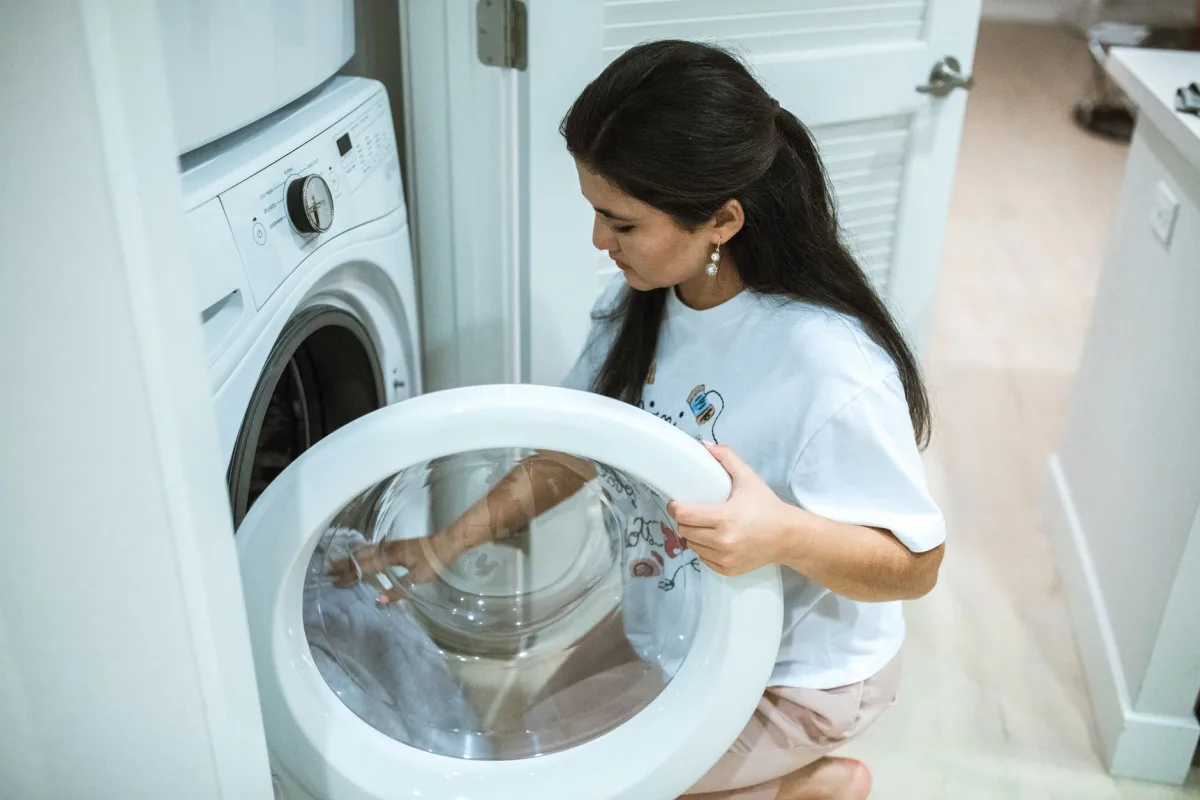
| Many laundry loads back to back | Floods the field, keeps soil saturated, thickens the mat | Spread loads across the week |
| Skipping pumping for years | Solids reach the field and overload the mat | Pump every 3 to 5 years |
| Pouring grease and fats down drains | Coats the mat and starves it of oxygen | Scrape plates, jar grease for the trash |
| Heavy bleach and chemical cleaners | Kill the bacteria that keep growth in check | Use septic-safe products sparingly |
| Ignoring a running toilet or leak | Adds constant water the field never gets to rest from | Fix leaks the day you notice them |
Notice the pattern. Almost everything that thickens the mat too fast comes down to sending the field more water, more solids, or fewer live bacteria than it can handle. Ease off on all three and the biomat tends to hold a healthy thickness for decades.
Can You Get Rid of Biomat?
This is where I have to disappoint the additive aisle. No poured-in product reliably dissolves an overgrown biomat and restores a clogged field. Some shock treatments and hydrogen peroxide flushes claim to, and a few can punch temporary holes in the mat, but they often damage the soil structure and any benefit rarely lasts.
The dependable moves are the boring ones. Rest the field. When a system sits mostly unused for weeks, the biomat starves and thins on its own, which is why some struggling fields recover after a household sharply cuts back on water. Fixing the source of overload, such as a running toilet, a dripping water softener, or an overdue pumping, lets the natural balance return.
When a field is truly sealed and will not bounce back, the real answer is rehabilitation or replacement guided by a licensed professional, not a bottle. For the full care routine that keeps a field from ever reaching that point, our complete drain field care guide lays out the habits worth building.
Tip: Give your field a rest day
The biomat stays balanced when the trenches get to drain and breathe between doses of water. So the single most helpful habit is to avoid flooding the field on any one day. Shifting laundry from a marathon Saturday to two or three lighter days across the week measurably eases the load on the mat, and it costs you nothing but a little scheduling.
Frequently Asked Questions
What is biomat in a septic drain field?
Biomat is a thin, dark, slimy layer of bacteria that forms where effluent from your septic tank soaks into the soil, mainly along the bottom and lower sides of the drain field trenches. It builds up naturally as bacteria feed on the waste in the effluent. In a healthy field it stays a fraction of an inch to an inch or so thick and does the final treatment of the water.
Is biomat good or bad for my septic system?
Both, and that is the confusing part. A healthy biomat is essential because it filters and treats the effluent before it reaches groundwater. The problem is only when it grows too thick and seals the soil so water can no longer soak away. A thin, balanced mat is exactly what you want. An overgrown one is what fails a field.
Can you remove or dissolve biomat?
Not with a product you pour in, despite what many additives claim. The reliable way to shrink an overgrown biomat is to starve it by resting the field and cutting the water, solids, and chemicals reaching it. When a field is fully sealed, a professional may rehabilitate or replace it. Shock chemicals can crack the mat briefly but often harm the soil and rarely give a lasting fix.
How long does it take biomat to clog a drain field?
A properly sized, well-maintained field can run 20 to 30 years before the biomat seals it, sometimes longer. Overloading shortens that dramatically. Constant excess water, solids from a tank that is never pumped, or grease and harsh chemicals can push a field into failure in a fraction of its expected life. How you use the system matters more than its age.
Do septic additives break down biomat?
There is no strong evidence that store-bought additives break down a clogging biomat, and some can even harm the balanced bacteria your system already relies on. A working tank and field grow all the bacteria they need on their own. Your money and effort go further toward pumping on schedule and spreading out water use than toward any bottle promising to clear the mat.
Conclusion
The biomat is the quiet paradox buried under your yard. The same living layer that makes your drain field clean water so well is the one that will, someday, wear the field out. You cannot stop it from forming, and you would not want to, because a field without a biomat is a field that is not treating anything. What you can do is keep it thin and balanced by feeding it less water, fewer solids, and gentler chemicals than it can comfortably handle. Do that and a field designed to last decades usually will. To keep protecting the most expensive part of your system, browse the rest of our drain field care articles and learn the habits that add years to its life.