
That hollow glug-glug from the toilet after you flush is one of the most common calls I get. On a septic system it almost always means air is trapped somewhere it should be moving freely, and the toilet bowl is the weakest point where that pressure escapes. Sometimes the sound is harmless. Other times it is the first quiet warning that your tank is filling or a vent is blocked. Knowing the difference saves you a needless service call, or saves you from shrugging off a real problem until it reaches your bathroom floor.
Key takeaways
- Gurgling means air is forcing its way back through a water trap because something is restricting normal flow.
- On septic, the two prime suspects are a blocked vent and a tank that is full or backing up.
- Occasional gurgling right after heavy water use is often minor; constant or worsening gurgling is not.
- Gurgling paired with slow drains and sewage odor points toward the tank or drain field, not a simple clog.
- Note the timing and which fixtures react before you call anyone, since that narrows the cause fast.
What is your toilet actually telling you when it gurgles?
Every drain in your home works on a simple idea. Water flowing down a pipe pulls air along behind it, and a vent stack running up through your roof feeds fresh air in so that water keeps moving smoothly. When that airflow is balanced, waste slips away silently.
When something restricts the flow, the air has nowhere clean to go. It gets pushed backward and bubbles up through the nearest water seal, which is usually the toilet because it holds the largest, lowest pool of standing water. Those septic air bubbles in the toilet are the sound of pressure finding the path of least resistance.
So the gurgle itself is a symptom, not a diagnosis. The real question is what is choking the flow, and on a septic property there are only a handful of likely answers.
The two septic causes worth understanding first
A blocked or restricted vent
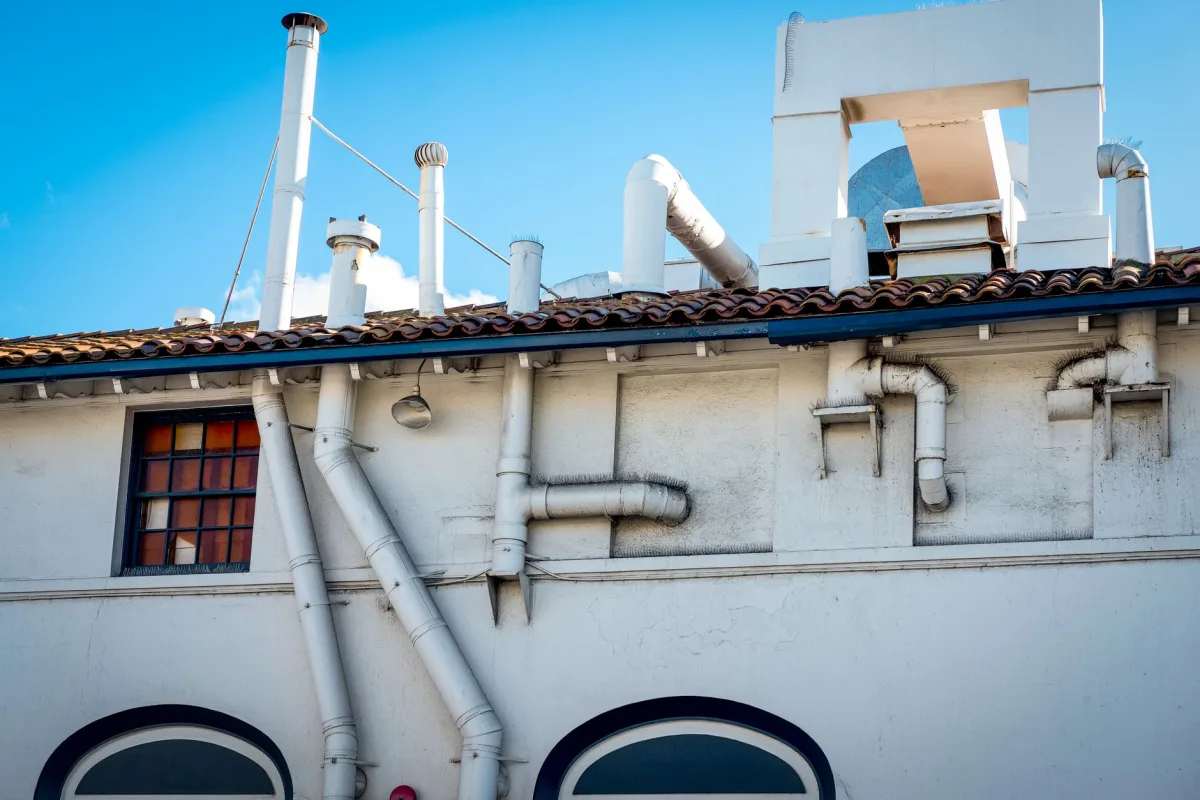
Your plumbing vent is the pipe you see poking through the roofline. It lets sewer gases out and lets replacement air in. Birds’ nests, leaves, ice, or a wasp nest can plug that opening, and once it is blocked the system starts pulling air backward through your traps instead.
A vent problem tends to affect the whole house at once, and it often shows up as gurgling drains on septic without any change in your tank level. This is the more benign of the two causes, though it still needs clearing.
An overfull tank or backing-up system
The other cause is downstream. When the tank is too full, the effluent filter is clogged, or the drain field can no longer accept water, wastewater has nowhere to go. It stacks up in the pipe leaving the house, and the trapped air escapes back through the toilet as a gurgle.
This is the version you do not want to ignore. Left alone, it moves from gurgling to slow drains to a genuine backup, and cleaning sewage off a bathroom floor is a far worse afternoon than a five-minute check would have been.
Common reasons a toilet gurgles on a septic system
Most gurgling traces back to one of the causes below. I have ordered them roughly from least to most serious, along with what you are likely to notice and how quickly you should act.
| Likely cause | What you will notice | How urgent |
|---|---|---|
| Partial clog in the toilet or branch line | Only one fixture gurgles or drains slowly | Low, a common household fix |
| Blocked roof vent | Several drains gurgle, no odor from the tank | Low to moderate, clear when able |
| Clogged effluent filter | Whole house slows at once, possible alarm | Moderate, a quick rinse often solves it |
| Tank full and due for pumping | Slow drains, odor near the lid, no habit change | High, schedule a pump-out |
| Drain field saturated or failing | Wet spots in the yard, backups, strong odor | High, call a septic professional |
The pattern in that last column matters. A single slow fixture is usually a plumbing job. Several fixtures acting up together, especially with odor, moves the suspicion toward your tank and field. For a broader map of what can go wrong beyond gurgling, our guide to common septic problems lays out the full range of symptoms and causes.
Is it just the toilet or the whole system?
Before you call anyone, spend two minutes narrowing it down. The answers point you toward a plumber, a simple filter rinse, or a septic pump truck.
- Run the bathroom sink and tub. If they gurgle or drain slowly too, the problem is bigger than the toilet.
- Flush and listen at other drains. Gurgling in a distant fixture when you flush the toilet suggests a shared restriction downstream.
- Check for odor near the tank lid or in the yard. A sewage smell shifts the odds toward a full tank or wet drain field.
- Ask what changed. A weekend full of guests or a marathon laundry day can overwhelm a tank temporarily.
- Look at the yard over the drain field. Soggy ground or unusually green stripes are a field warning, not a toilet problem.
If several fixtures act up at once and the slowdown is spreading, treat it as a system issue. Our walk-through on how to fix slow drains on a septic system covers the safe order of checks so you do not skip straight to the expensive assumption.
When should you worry about a gurgling toilet?
Not every gurgle is an emergency. A single glug after a heavy-use day, with everything else draining normally, is often just the system catching its breath. Watch it, but do not panic.
You should worry when the pattern turns steady or gets worse. Gurgling on every flush, drains slowing across the house, sewage odor near the lid, or wastewater rising in a shower are all signs the tank or field is struggling. Those overlap heavily with the broader signs of a failing septic system, and catching them early is the whole game.
One safety note that has nothing to do with cost: if you smell a persistent rotten-egg odor indoors, that is sewer gas escaping a dry or failing trap, and it deserves prompt attention. The EPA overview of how a septic system works is a good primer on where those gases are supposed to travel.
What to do first when the toilet starts gurgling
Work through these in order. Most homeowners solve a gurgling toilet on the first two or three steps without spending a dime.
- Stop adding water. Hold off on laundry, dishwashing, and long showers so you are not feeding a system that is already backing up.
- Test other fixtures. Note whether the sink, tub, and other toilets gurgle or drain slowly, since that tells you how far the problem reaches.
- Check the effluent filter if your tank has one. A clogged screen is a five-minute rinse and a frequent culprit behind whole-house slowdowns.
- Look at the tank level and the yard. Wastewater above the outlet pipe means the tank is full; soggy ground over the field means a saturation problem.
- Clear the vent only if you can do it safely. A blocked roof vent sometimes flushes clear with a garden hose, but skip rooftop work if the pitch or your footing is risky.
- Call a professional if odor, backups, or wet spots appear. Those point past the toilet to the tank or field, where guessing gets expensive.
A quick check against a university reference helps you calibrate what is normal. The University of Minnesota Extension owner’s guide is a plain-spoken resource on tank behavior and pumping intervals.
Ray’s field tip
Keep a simple log of when your toilet gurgles and what you were running at the time. On my own system, a note as short as “gurgled after two back-to-back laundry loads” told me my flow, not my tank, was the issue. That one line turned a worried phone call into a scheduling fix: I spaced my loads out, and the sound stopped. Patterns are cheap to record and worth a lot when you finally do talk to a pro.
Frequently Asked Questions
Is a gurgling toilet on septic always a serious problem?
No. A single gurgle after heavy water use, with every other drain working normally, is often minor. It turns serious when the gurgling is constant, spreads to other fixtures, or arrives with sewage odor and slow drains across the house.
Can a blocked vent alone make my toilet gurgle?
Yes. A vent plugged by leaves, ice, or a nest starves the drains of replacement air, so pressure pushes back through the toilet trap. Vent blockages usually affect several drains at once and come without any change in your tank level or odor.
Does a gurgling toilet mean my septic tank is full?
It can, but not on its own. A full tank usually pairs gurgling with slow drains, odor near the lid, and no change in your water habits. Check the water level at the outlet pipe; if it sits above the outlet, schedule a pump-out.
Should I use a drain chemical to stop the gurgling?
Skip harsh chemical drain cleaners on a septic system. They rarely fix a venting or tank issue and can kill the bacteria your tank needs. Find the real cause first, whether that is a filter, the tank, or the vent, and treat that instead.
Why does my toilet gurgle only when I run the washing machine?
That points to flow volume rather than a blockage. A washer dumps a large slug of water fast, and if the system is near capacity the extra load pushes air back through the toilet. Spacing laundry across the day usually quiets it.
Listen to the gurgle, then act
A gurgling toilet is your septic system talking to you, and the message is usually easy to read once you know the vocabulary. An occasional glug after a busy water day is nothing to lose sleep over. A steady gurgle that brings slow drains, odor, or wet spots along with it is worth acting on before it becomes a backup. Note the timing, test your other fixtures, and check the simple parts first. For more help reading the warning signs your system sends, browse the rest of our septic problems archive.