The word “flushable” does a lot of heavy lifting on a package of wipes, and almost none of it holds up in a septic tank. The wipe clears the toilet bowl, which is all the label really promises. Then it settles into a tank that has no practical way to break it down.
I have fished intact wipes out of tanks that were flushed months earlier, still whole, still snagging on the outlet. So here is what is myth and what is fact about wipes and your system.
Key Takeaways
- “Flushable” is a bowl-clearing claim, not a septic one. It says the wipe leaves the toilet, not that it breaks down in your tank.
- No wipe, including ones labeled septic safe or biodegradable, disperses the way toilet paper does. They stay intact for months.
- Wipes clogging septic filters, baffles, and pumps is one of the most common avoidable service calls I get asked about.
- No enzyme, additive, or “wipe dissolver” breaks down synthetic wipe fibers in a tank.
- The only truly septic safe wipe is the one that goes in the trash, not the toilet.
What the “Flushable” Label Really Promises
The word is marketing shorthand, not a septic rating. Industry flushability guidelines check whether a wipe clears the toilet and moves through the drainline without an immediate jam. That is the whole bar. Nothing in that test asks whether the wipe falls apart the way toilet paper does, and nothing accounts for a tank where solids sit still for days at a time.
Federal guidance is blunt about it. The EPA lists wipes among the items to keep out of a septic system, flushable or not. So a product can be perfectly “flushable” and still be one of the worst things you routinely send to a tank. Those two facts sit side by side, and the label only tells you about the first one.
Myth: “Flushable” and “Septic Safe” Mean the Same Thing
The claim: if a wipe is safe to flush, it is safe for my septic tank.
The reality: those two phrases describe different journeys. “Flushable” covers the first 30 seconds, from bowl to pipe. “Septic safe” would have to cover the next several years, from tank to drain field. A wipe that clears your trap still has to break down inside a tank that offers no grinding and no strong current, just quiet settling. It does not break down. It floats up into the scum layer or sinks into the sludge and waits there, whole, until someone pumps it out.
Myth: Wipes Break Down Like Toilet Paper
The claim: a wipe dissolves in the tank the same way toilet paper does.
The reality: this belief causes the most damage of any on the list. Toilet paper is engineered to fall apart in seconds, using short, loosely bound cellulose fibers that lose their structure the moment they get wet. Wipes are built to do the opposite. Even “paper” wipes use longer, reinforced fibers, and many use polyester or polypropylene, which is another way of saying plastic. That strength is the selling point when you are wiping a counter, and the exact problem once the wipe is flushed.
You can test it at your own sink. Drop a square of toilet paper in one jar of water and a flushable wipe in another, shake both, and come back in an hour. The toilet paper is pulp. The wipe is still a wipe, fully intact and ready to snag on the next thing it meets. Here is how the common bathroom items stack up.
| Item | Main material | Breaks apart in water | What it does in a tank |
|---|---|---|---|
| Toilet paper | Short cellulose fiber | Seconds | Disperses, digests normally |
| “Flushable” wipe | Reinforced or plastic fiber | Weeks to never | Stays whole, snags and mats |
| Baby or cleaning wipe | Polyester, polypropylene | Does not | Persists for years |
| “Biodegradable” wipe | Plant fiber blend | Faster, but still slow | Often intact when solids move on |
The pattern is hard to miss. Only one row belongs in a toilet. For the rest of the list of things that look flushable but are not, see our rundown of what not to flush on a septic system.
Myth: A Septic Additive Will Dissolve the Wipes
The claim: a monthly enzyme or bacteria treatment will eat any wipes that make it into the tank.
The reality: no additive dissolves a wipe in a working tank. Enzyme and bacterial products feed on organic matter like grease and paper, and they do it slowly. They do not eat plastic fiber at all, and on the rare cotton-based wipe they cannot work fast enough to matter before the wipe drifts to your outlet or pump. A jug of “septic treatment” will not undo a wipe habit, and buying one to try is money spent on the wrong problem. Additives that promise to fix flushing mistakes sit on our list of septic products to approach with caution.
Myth: “Septic Safe” and “Biodegradable” Wipes Are Fine to Flush
The claim: the label says septic safe or biodegradable, so I can flush these freely.
The reality: better than a baby wipe, but still not flush-and-forget. A few brands genuinely disperse faster and pass third-party dispersal tests, and I give them credit for that. In a tank, though, “faster than terrible” is still slow. Biodegradable means a material breaks down eventually under the right conditions, meaning oxygen, microbes, and time. A septic tank is a low-oxygen environment where solids may sit only a few days before heading toward the field, so “eventually” often arrives long after the wipe has already moved on. Treat every wipe as trash. If you ever flush a truly dispersible one, make it a rare exception, not a daily routine.
Myth: Wipes Only Clog City Sewers, Not Home Septic Systems
The claim: those giant “fatberg” clogs happen in municipal sewers, so my private tank is safe.
The reality: the viral clogs are municipal, but a private system gets hit closer to home and entirely on your dime. The University of Minnesota’s onsite sewage program keeps wipes on its do-not-flush list for exactly this reason. Here is where wipes cause trouble in a septic setup:
- Inlet and outlet baffles: wipes drape over the tees and snag, then catch more debris until flow slows.
- Effluent filter: a wipe mats across the filter screen and mimics a full tank, backing sewage up into the house.
- Pumps and screens: in mound and aerobic systems, a single wipe can jam an impeller or burn out a pump motor. Aerobic units already ask for attention on the air side, which our guide to choosing a septic aerator pump walks through.
- The drain field: small fragments that slip past everything add to the biomat and quietly shorten field life.
None of those repairs are cheap. A jammed pump or a wipe-clogged filter is a service call that runs anywhere from $150 for a filter cleaning to well over $1,000 for pump work, all of which a bathroom trash can would have prevented.
Tip: Make the trash can easier to reach than the toilet
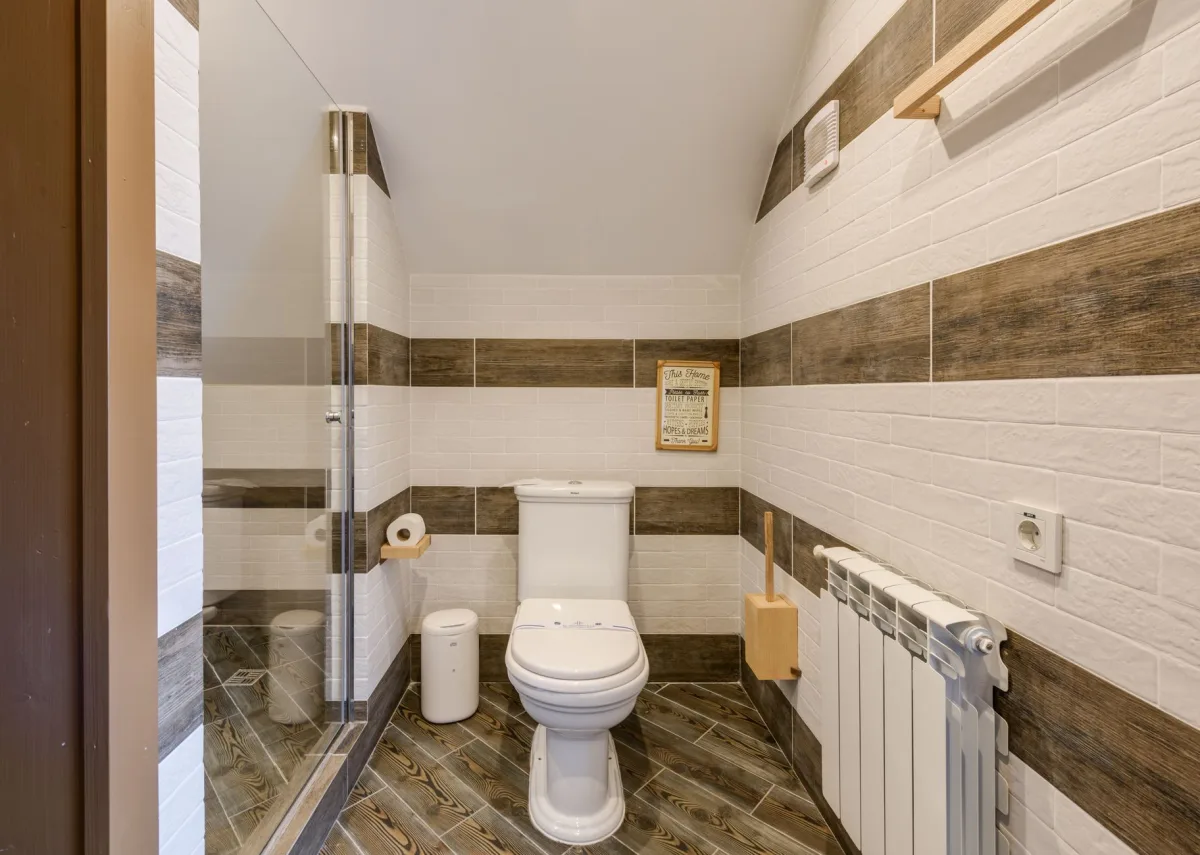
The single most effective wipe fix I know has nothing to do with the product and everything to do with the room. Put a small lidded, lined trash can within arm’s reach of every toilet, and empty it with the regular household trash. People, including guests, follow the setup they see in front of them. If wipes never enter the tank, not one of the myths above can cost you a dollar.
What to Reach for Instead
Giving up the fresh-feeling of a wipe does not mean giving up the clean. A few simple swaps keep the tank happy without much sacrifice.
- Plain toilet paper, single or two-ply. It disperses fastest and is the only thing besides waste your tank is built to handle.
- A bidet or a clip-on bidet attachment. It cuts wipe use to near zero and pays for itself in a season.
- “Flushable” wipes used as designed for cleaning, then dropped in the trash rather than the toilet.
- A square of toilet paper dampened with a little tap water, which gives you the wipe feel with none of the tank cost.
Pick any one of those and the wipe question is settled for good. For the wider view on vetting what you buy for a septic home, our guide to septic safe products lays out the same trash-versus-tank thinking for the rest of the bathroom.
Frequently Asked Questions
Are flushable wipes septic safe?
No. “Flushable” only means the wipe clears the toilet bowl and drainline without an immediate jam. It says nothing about whether the wipe breaks down inside your tank, and almost none of them do. A flushable wipe lands in the tank whole and stays that way for months, adding to the scum and sludge you pay to pump. Being safe to flush and being safe for a septic system are two different things, and wipes only meet the first one.
Will one flushable wipe clog my septic tank?
A single wipe rarely causes an instant clog, so the risk is not one flush, it is the habit. Wipes accumulate because nothing in the tank breaks them down. Over weeks and months they drape over baffles, mat across the effluent filter, or drift toward a pump. The clog that stops your house is usually the hundredth wipe, not the first. That is why the safe rule is to keep every wipe out, rather than trying to guess how many the tank will tolerate.
Are biodegradable or “septic safe” wipes okay to flush?
They are better than a plastic baby wipe, but still not something to flush freely. Biodegradable means a material breaks down eventually under the right conditions, and a low-oxygen septic tank moves solids toward the field within days, often before the wipe has dispersed. A few brands do pass real dispersal tests, and if you ever flush one, treat it as a rare exception. For daily use, the trash can is still the right destination for any wipe.
How do I get a flushed wipe out of my septic system?
You do not fish it out yourself. Wipes that have already reached the tank come out with a routine pump-out, when the hauler removes the accumulated scum and sludge. If a wipe has clogged an effluent filter or a pump, a technician clears that component during service. There is no additive or home trick that dissolves them. The practical fix is to stop new wipes from going in and let the next scheduled pumping carry out the ones already there.
What can I use instead of flushable wipes?
Plain toilet paper is the only wipe-style product a tank is designed to handle, and it disperses in seconds. If you want the clean feeling a wipe gives, a bidet or a clip-on bidet attachment does the job with no tank cost, and a square of toilet paper dampened with tap water works in a pinch. You can still buy wipes for cleaning tasks, just throw them in a lidded bathroom trash can rather than flushing them.
Conclusion
The “flushable” label is a promise about your toilet, not your tank, and that gap is where the trouble hides. Wipes clear the bowl, then sit intact in the tank for months, snagging baffles, matting filters, and jamming pumps that a trash can would have spared. No additive undoes it, and the “septic safe” and “biodegradable” versions only slow the problem rather than solve it. Keep a lined can next to every toilet, reserve the tank for toilet paper and waste, and the whole debate stops mattering. For more on the everyday buys that keep a system running clean, browse the rest of our septic safe products articles.