The dishwasher is one of the quietest appliances in a septic home, and one of the most fussed over. Owners fret about whether pods or powder will hurt the tank, as if the wrong pick could ruin a drain field overnight. It will not. But the form you buy, and one ingredient hiding on the label, do nudge your system in better or worse directions across the years you live with it.
So here is how pods and powder really compare for a septic tank, what actually moves the needle, and the default I reach for on my own system.
Key Takeaways
- Neither pods nor powder will wreck a healthy tank on its own. What is inside the box matters far more than the shape it comes in.
- Phosphate load is the one thing to check. A phosphate free dishwasher detergent handles the main septic and groundwater concern in any form.
- Pods have one real advantage: each pack is pre-measured, so you cannot pour in too much on a normal load.
- Powder lets you scale the dose down on light loads and skips the dissolving film, but budget powders lean on salt fillers.
- A septic safe dishwasher detergent comes down to low phosphate, little or no chlorine bleach, and a sensible dose, not pods versus powder.
What a Septic Tank Actually Cares About
Start with the water, because most people assume the dishwasher is a big load on the tank. It is not. A modern machine uses roughly 3 to 5 gallons per cycle, less than a single toilet flush plus a short handwash at the sink. Next to a 1,000 gallon tank, a dishwasher run barely registers. Hydraulic overload is a laundry and long-shower problem, not a dishwasher one.
So the detergent debate is really about chemistry, not volume. Three things in that small scoop or pack are worth your attention: how much phosphate it carries, whether it packs chlorine bleach or antibacterial agents, and how much of it you use. Get those right and the form is almost a footnote. Our overview of what makes a product septic safe walks through the same logic for the whole cleaning cabinet.
Phosphates, the ingredient worth checking
Phosphates soften hard water and lift stuck-on food, which is why detergents used them for decades. The catch is what they do downstream. Phosphorus that passes through a tank and reaches lakes, streams, or shallow groundwater feeds algae blooms, the same nutrient pollution the EPA describes here.
Good news for septic owners: since 2010, US makers voluntarily cut automatic dishwasher detergents to under 0.5 percent phosphorus, and many states wrote that into law. Most mainstream products on the shelf today already qualify as a phosphate free dishwasher detergent in practical terms. The exceptions tend to be older stock, some commercial products, and a few imports, so a quick label check is still worth the two seconds.
Chlorine bleach and your tank bacteria
A septic tank runs on bacteria, and harsh disinfectants can knock them back. The occasional dishwasher detergent with a little chlorine bleach, diluted into a 1,000 gallon tank, is not the threat people fear. The tank recovers. What you want to avoid is a habit of heavy antibacterial and bleach-loaded products across every drain in the house at once. For dishes, a plain low-bleach formula does the job without the extra worry.
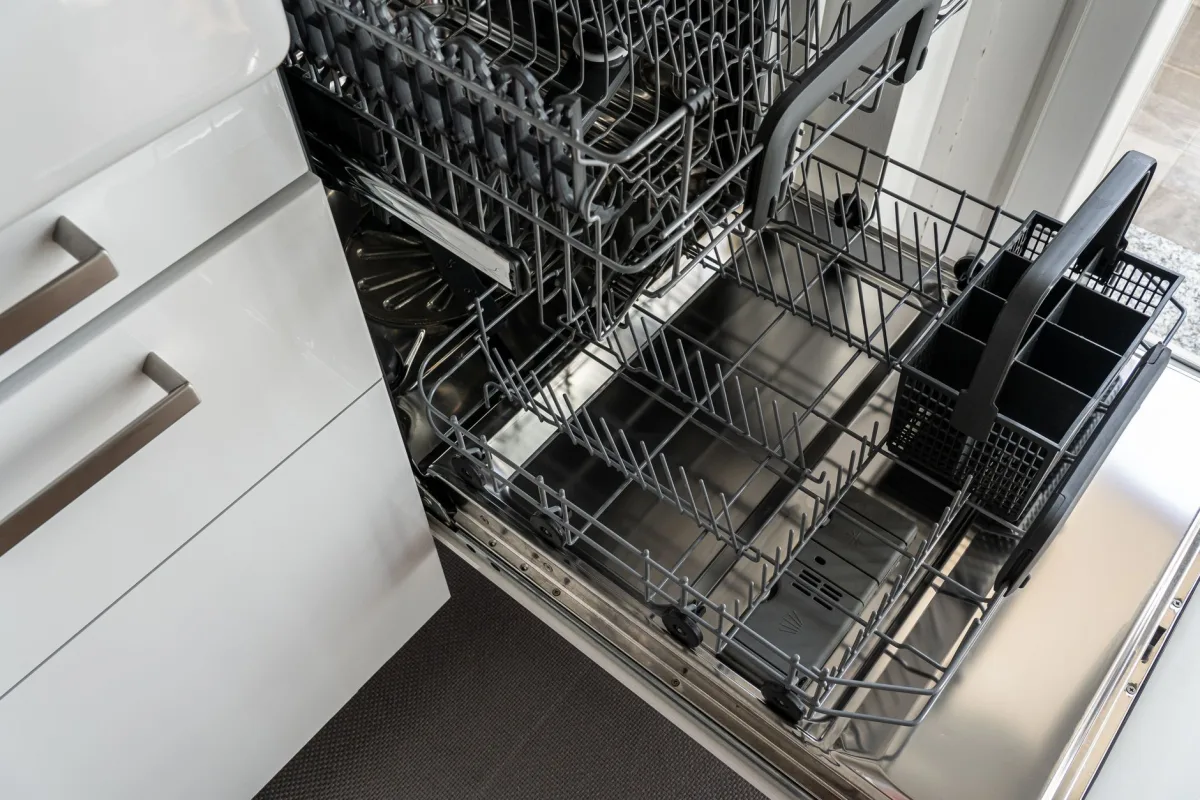
Dishwasher Pods and Septic: Strengths and Weak Spots
Pods, also sold as packs or tablets, are the fastest-growing form for a reason. You drop one in and walk away. On the question of dishwasher pods and septic health, the honest answer is that they are fine for the tank, with a couple of caveats worth knowing.
The real strength is dosing. Each pod is measured for a normal load, which quietly solves the most common mistake I see: pouring in far more detergent than a wash needs. Overdosing wastes money and sends extra surfactant and salt to the tank for no cleaning benefit. A pod makes that error almost impossible.
The weak spots are minor. You cannot use half a pod for a light load, so a nearly empty machine gets a full dose. The dissolving film is polyvinyl alcohol, which breaks down in water and does not clog a tank, though it is a plastic and the environmental debate around it is ongoing. And because everything is packed into one pack, some pods carry more additives per wash than a light scoop of powder would.
Powder Dishwasher Detergent and Septic: Strengths and Weak Spots
Powder is the old reliable, and it still has a place. Its biggest advantage is control. You decide the dose, so a lightly soiled load gets a smaller scoop and the tank sees less of everything. On very hard water you can nudge it up, and on soft water you can cut it back, which no pod lets you do.
Powder also skips the dissolving film entirely, and it is usually the cheapest form per load. Phosphate free powders are easy to find, and many fragrance-free options exist for anyone keeping the whole house gentle on the tank.
The trade-offs: cheaper powders lean on salt fillers like sodium sulfate to keep the box from clumping, and that adds dissolved solids the tank does not need. Eyeballing the scoop makes overdosing easy, the opposite of the pod’s built-in guardrail. Powder can also cake in a humid cabinet, and a small share of older or imported powders still run higher on phosphate than current US norms.
Gels and liquid detergents sit between the two. They dose like powder and skip the film like powder, but they often include more of the very chlorine-based ingredients you would rather limit, so I treat them as a distant third for a septic home.
Pods vs Powder, Side by Side
Lined up against the factors that a tank actually notices, the two forms trade wins rather than one crushing the other. Here is the head-to-head.
| Factor | Pods | Powder |
|---|---|---|
| Dosing control | Fixed, one pack per load | Fully adjustable by scoop |
| Overdose risk | Very low, pre-measured | Higher, easy to over-pour |
| Phosphate free options | Widely available | Widely available |
| Salt fillers | Fewer per wash | More in budget brands |
| Dissolving film | Yes, polyvinyl alcohol | None |
| Chlorine bleach | Varies by brand | Varies by brand |
| Cost per load | Higher | Usually lowest |
| Best for | People who over-pour | Light loads, soft water, tight budgets |
Read down the table and a pattern shows up. The differences that look big on a store shelf mostly shrink once you commit to a phosphate free, low-bleach product and use the right amount. That is the same conclusion our roundup of septic safe cleaning products reaches for the rest of the house.
So Which Is the Safer Default?
On my own system, I run pods, and the reason is entirely about human behavior rather than chemistry. I know myself, and with a box of powder I would eyeball a heaping scoop out of habit. The pod removes that temptation and keeps every load at the dose the machine was designed for. For a busy household where more than one person loads the dishwasher, that consistency is worth the few extra cents per wash.
If you have soft water, run a lot of half loads, or want the lowest cost, a phosphate free powder used with a light hand is just as kind to the tank. Neither choice is wrong. The choice that would be wrong is a phosphate-heavy, bleach-loaded product used at double the dose, in any form. Pick low phosphate, keep the bleach modest, and match the amount to the load, and your tank will not care what shape the detergent arrived in. For the full framework on vetting any product you pour down a septic drain, our complete guide to septic safe products lays out what to look for.
Tip: Scrape, do not heavily pre-rinse
Scraping plates into the trash before loading lets you run a lighter detergent dose and keeps food solids out of the tank, where they add to the sludge you pay to pump. Skip the long pre-rinse under a running tap, which just sends gallons of extra water to the drain field for no gain. A good scrape plus a full, well-loaded cycle is the septic-friendly sweet spot.
Frequently Asked Questions
Are dishwasher pods safe for septic systems?
Yes. Dishwasher pods are safe for a healthy septic tank. The dissolving film is polyvinyl alcohol, which breaks down in water and does not clog the system, and modern pods are low in phosphate. Their built-in advantage is that each pack is pre-measured, so you avoid the overdosing that sends extra detergent and salt to the tank. Choose a phosphate free, low-bleach pod and you have handled the main concerns.
Is powder or liquid dishwasher detergent better for septic?
Powder usually edges out gels and liquids for a septic home. Powder lets you adjust the dose down on light loads and skips the plastic film, while liquids and gels often carry more chlorine-based ingredients you would rather limit. The one downside of budget powder is salt fillers that add dissolved solids. If you compare all three, a phosphate free powder or a pre-measured pod are the two forms I would reach for first.
What dishwasher detergent is septic safe?
A septic safe dishwasher detergent is one that is low in phosphate, low or free of chlorine bleach, and used at the correct dose for the load. The form, pod or powder, matters far less than those three traits. Look for products labeled phosphate free and fragrance free, and avoid anything marketed as antibacterial or heavy-duty bleach. Used sensibly, most mainstream US detergents meet the bar because phosphate was phased out years ago.
Do phosphate free detergents clean as well?
For most households, yes. When phosphates were phased out, manufacturers replaced them with enzymes and other softening agents, and cleaning performance recovered quickly. If you have very hard water and notice film on glasses, the fix is usually a rinse aid or a water softener setting, not a return to phosphate detergent. Phosphate free is now the norm, so you are unlikely to see a difference on everyday dishes.
Can dishwasher detergent kill the bacteria in my septic tank?
Not at normal use. The small amount of detergent from a dishwasher cycle, diluted into a 1,000 gallon tank, will not sterilize it, even if the product contains a little chlorine bleach. The bacteria recover between loads. Real trouble comes from pouring strong bleach, drain cleaners, and antibacterial products down every drain at once. Keep those in check and a normal dishwasher detergent poses no threat to your tank.
Conclusion
Pods versus powder is a smaller decision than the internet makes it out to be. Both are safe for a working septic tank, both come in phosphate free versions, and neither adds enough water to strain a drain field. Pods win on preventing overdose, powder wins on flexibility and price, and the real deciding factors, phosphate load and how much you use, cut across both forms. Buy low phosphate, keep the bleach light, match the dose to the load, and you are done thinking about it. For more on the everyday products that keep a system running clean, browse the rest of our septic safe products articles and the habits worth building around them.