Two identical drain fields can be installed the same day by the same crew, and ten years later one is still humming along while the other is soggy and failing. The difference usually isn’t the pipes or the tank — it’s the dirt underneath. The soil that surrounds your leach lines does the real work of cleaning wastewater, and its texture decides how fast that water can safely soak away. In my years around septic systems, I’ve learned that owners who understand their soil make far smarter decisions. In this guide you’ll learn how soil percolation affects your drain field, what a perc test measures, and which soils help or hurt.
Key Takeaways
- The soil under your field — not the pipes — does most of the wastewater treatment, so its type largely decides how long the field lasts.
- A perc test measures how fast water drains, usually reported in minutes per inch (MPI); most conventional fields need a rate between about 1 and 60 MPI.
- Sandy loam is close to ideal — fast enough to drain, slow enough to treat. Heavy clay drains too slowly; pure sand or gravel drains too fast.
- Poor soil doesn’t mean no septic — it usually means an alternative system like a mound, which costs more to build.
- Compaction, saturation, and driving over the field all ruin good soil, so protecting it is part of routine care.
Before we get into soil types, it helps to picture where the soil fits in the process. If you’re new to how the last stage of treatment works, our primer on what a leach field is and how it works is a good companion to this article.
Why the Soil Does the Real Work
Your septic tank only handles the first, rough stage of treatment. It settles out solids and lets bacteria break down some of the waste, but the liquid that leaves the tank — called effluent — is still full of harmful bacteria and nutrients. It is not clean water yet.
That effluent flows into the drain field, trickles out of perforated pipes, and slowly soaks down through the soil. As it moves through those layers, a living film of microbes and the soil particles themselves filter out pathogens and pull out nutrients. By the time the water reaches the groundwater below, it has been purified. In other words, your soil is the final treatment plant, and the pipes just deliver water to it.
This is why soil type matters so much. If water races through too fast, it reaches the groundwater before the microbes can clean it — a contamination risk. If it moves too slowly, effluent backs up, saturates the ground, and surfaces in your yard. The soil has to hit a sweet spot, and that balance is exactly what a perc test is designed to find.
What a Perc Test Actually Measures
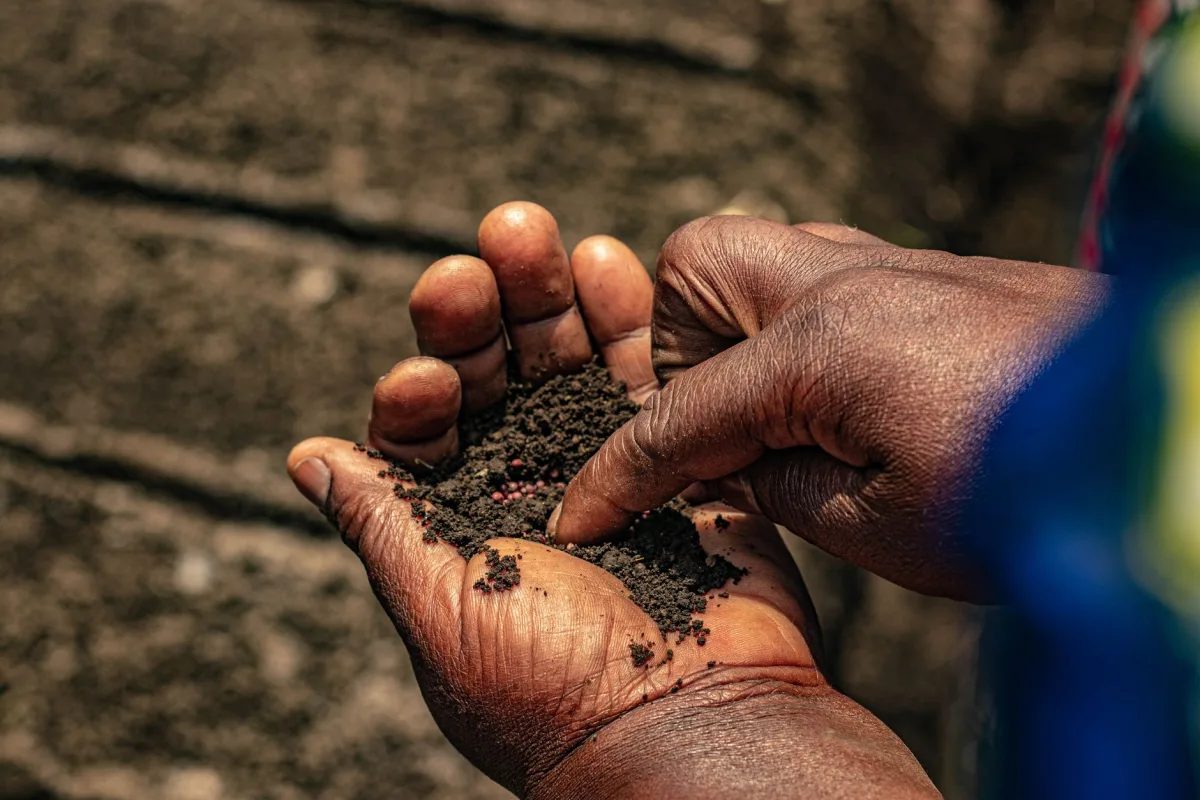
A percolation test — almost always shortened to “perc test” — measures how quickly water drains through the soil at your proposed field site. Before most counties will issue a septic permit, they require one, because it tells the designer whether the ground can handle a drain field at all and how big that field needs to be.
How the test is done
The basic version is simple. A tester digs one or more holes to the planned depth of the field, pre-soaks them so the soil is saturated (the way it would be under a working system), then fills them with a set amount of water and times how far the level drops. The result is expressed as a percolation rate in minutes per inch (MPI) — how many minutes it takes the water to fall one inch.
A low number means fast drainage; a high number means slow. Many jurisdictions also require a deep soil pit dug by a backhoe so a professional can read the soil layers directly and check how far down the seasonal high water table sits. The soil evaluation and the perc rate together decide the design.
Reading the numbers
Rules vary by state and county, but the general ranges below are widely used. Think of them as a guide to what your rate likely means, not a substitute for your local health department’s standards.
| Perc rate (MPI) | Drainage | What it usually means |
|---|---|---|
| Under 1 | Extremely fast | Too fast — often sand/gravel; water may not be treated |
| 1–30 | Good | Ideal range for a conventional drain field |
| 30–60 | Slow but usable | Workable, but the field must be larger |
| Over 60 | Very slow | Often fails perc; needs an alternative system |
| General ranges only. Your county sets the exact pass/fail thresholds and design requirements. | ||
Tip: Find your original perc results
If your system already exists, the perc rate and soil report from when it was installed are gold. They tell you how forgiving your soil is and how hard you can afford to push the field. Your county health department or the permit file for the property usually has these records — ask for the “soil evaluation” or “percolation test” on file for your parcel.
The Main Soil Types and How They Behave
Soil is mostly a mix of three particle sizes: sand (largest), silt (medium), and clay (smallest). The ratio of those three decides how water moves and, therefore, how a drain field performs. Here’s how the common types stack up.
Sandy loam: close to ideal
Loam is a balanced blend of sand, silt, and clay, and sandy loam leans slightly toward sand. This is the soil most septic designers hope to find. It drains fast enough that effluent doesn’t pool, but slow enough that water lingers long enough for the microbes to treat it. If your perc rate lands comfortably in the good range, you likely have a loamy soil, and your field has a real shot at a long life.
Sand and gravel: too fast
Pure sand or gravelly ground drains almost instantly. That sounds good, but it’s actually a problem: water can shoot straight through to the groundwater before it’s cleaned, risking contamination of nearby wells. Very sandy sites sometimes pass perc but require design tweaks — extra soil layers or a specific trench depth — to slow the water down enough for proper treatment.
Clay: too slow
Clay is the opposite headache. Its particles are so fine and tightly packed that water barely moves through them. A heavy clay site often fails a perc test outright because effluent can’t soak away fast enough, so it backs up and surfaces. Clay-heavy soils are one of the most common reasons a lot can’t take a conventional field.
Silt and rocky or shallow soils
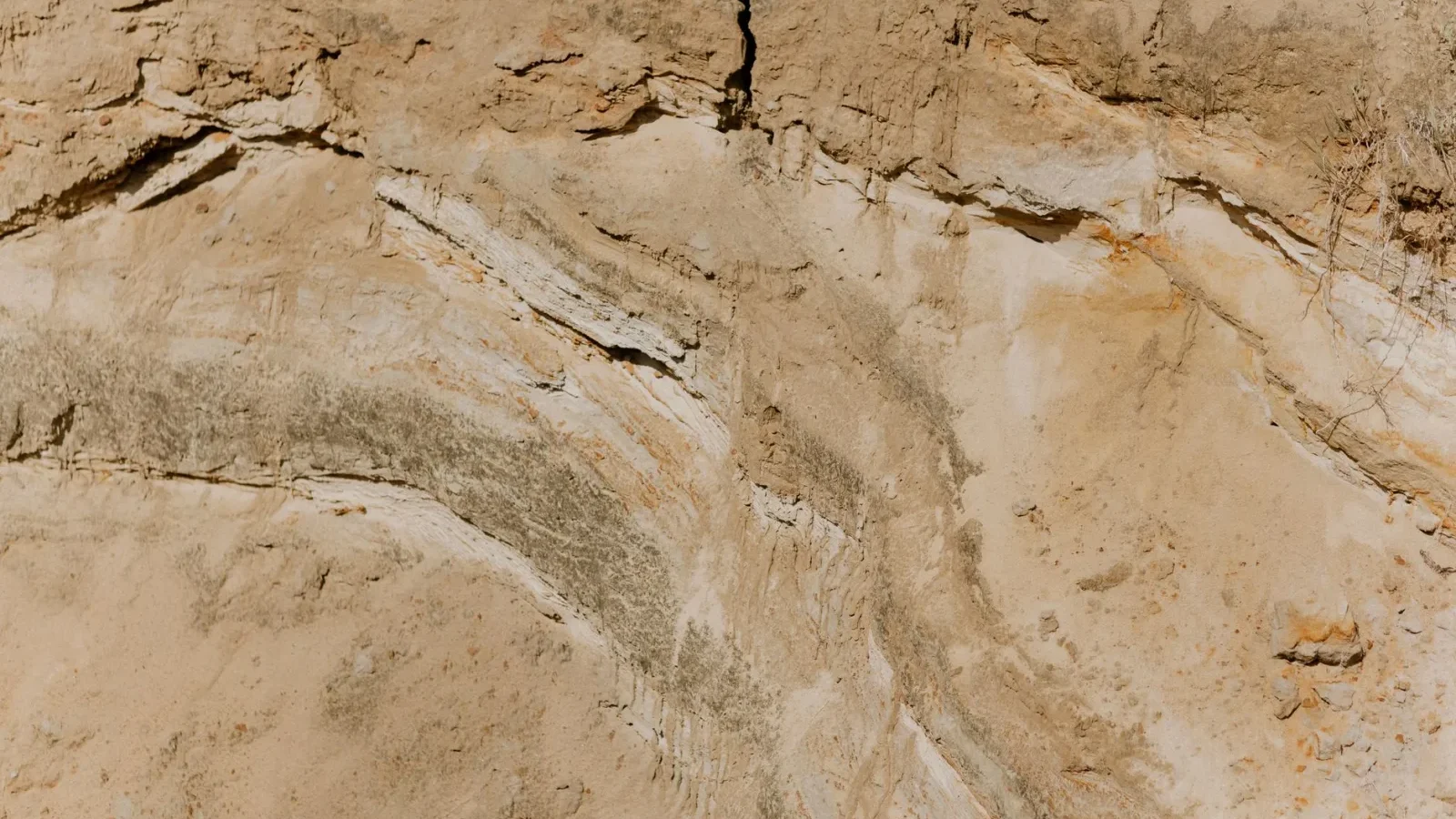
Silty soils fall in between but can compact and slow down over time. The other big challenge is depth: if you hit solid rock (bedrock) or a high water table only a foot or two down, there isn’t enough clean soil beneath the pipes to treat the water. Most codes require a minimum amount of unsaturated soil below the field, and shallow sites often fail on that alone.
What Happens When Your Soil Isn’t Ideal
Poor soil rarely means you can never have a septic system. It usually means you need a different, more engineered design — and a bigger budget. When the native ground can’t do the job on its own, the fix is to bring in better soil or add a treatment step so cleaner water reaches the ground.
- Mound system — a raised bed of engineered sand and gravel built above poor or shallow soil. Effluent is pumped up into it and treated as it filters down. It works where clay or a high water table would sink a conventional field.
- Aerobic treatment unit (ATU) — adds oxygen to break waste down more thoroughly, producing cleaner effluent that difficult soils can handle in a smaller area.
- Sand filter — routes effluent through a bed of sand for extra treatment before it enters the ground.
- Drip distribution — spreads effluent slowly through shallow tubing, which suits tight or shallow soils.
These alternatives cost more to install and often add pumps and controls to maintain. They’re also different from older disposal methods some homes still use — if you’ve heard the term “dry well” or “seepage pit,” our explainer on the difference between a drain field and a seepage pit clears up how those compare and where each fits.
How to Protect the Soil You Already Have
Even great soil can be ruined by everyday habits. The whole system depends on the ground staying loose and able to take in air and water, so protecting that soil is a core part of drain field care. Follow these steps to keep it working:
- Keep weight off the field. Never drive or park vehicles, or store heavy equipment, over the drain field. Compaction crushes the air pockets the soil needs and is hard to undo.
- Divert extra water away. Route roof downspouts, sump pumps, and surface runoff so they don’t pour onto the field. Waterlogged soil can’t absorb effluent.
- Don’t overload the system. Spread laundry and heavy water use across the week. A steady, moderate flow lets the soil recover between doses.
- Plant only shallow-rooted cover. Grass is ideal. It holds the soil and pulls out moisture without roots reaching the pipes below.
- Skip the concrete. Don’t pave, build a shed, or add a patio over the field — it seals the soil off from the air it needs.
On my own property, the single biggest change I made was fixing where the rain went. A downspout used to dump straight onto the edge of the field, and that corner stayed spongy for days after every storm. Rerouting it to a swale a few feet away let the soil dry out and breathe again, and the soggy patch never came back. It was a cheap afternoon’s work that likely bought the field years.
Frequently Asked Questions
Quick answers to the questions homeowners ask most about soil and drain field percolation.
What is a good perc rate for a septic drain field?
Most conventional drain fields work best with a percolation rate between about 1 and 30 minutes per inch (MPI). Rates from 30 to 60 MPI can still work but usually require a larger field. Anything faster than 1 or slower than 60 often fails and points to an alternative system. Your county sets the exact limits.
What is the best soil for a drain field?
Sandy loam is close to ideal. This balanced blend of sand, silt, and clay drains fast enough that effluent doesn’t pool, yet slowly enough that soil microbes can treat the water before it reaches groundwater. Pure sand drains too fast to clean the water, while heavy clay drains too slowly and backs up.
Can you install a septic system in clay soil?
Often not a conventional one, since heavy clay drains too slowly and effluent backs up. But clay sites usually aren’t hopeless. An engineered alternative like a mound system, sand filter, or aerobic treatment unit can work by adding better soil or extra treatment. These cost more to build and maintain, so budget accordingly.
How much does a perc test cost?
Costs vary widely by region and site complexity, but a basic percolation test commonly runs a few hundred dollars, and a full soil evaluation with a backhoe pit can cost more. Because the results determine whether and how you can build, it’s money well spent. Check with your local health department for testers and requirements.
Can soil under a drain field go bad over time?
Yes. Even good soil can lose its ability to absorb water. Compaction from vehicles, constant saturation from over-use or poor drainage, and a heavy buildup of the microbial layer (biomat) all slow percolation. That’s why protecting the field from weight and excess water is part of routine maintenance, not a one-time concern.
The Bottom Line
The ground beneath your drain field is the real treatment plant, and its texture — how fast water percolates through it — decides how well and how long the field performs. Sandy loam is the goal; too much sand or too much clay both cause trouble, and a perc test is how the pros find out which you have. If your soil isn’t ideal, engineered systems can still make septic work. And whatever soil you started with, keeping it loose, dry, and undisturbed protects your biggest septic investment. To put all of this into a full care plan, see our complete guide to your septic drain field and browse the rest of our drain field library. When in doubt about your own soil, your local health department or a licensed installer can read your site far better than any chart. For more on siting and soil standards, the U.S. EPA’s SepticSmart program is a solid, non-commercial starting point.