

The last owner of my house handed me a manila folder at closing with exactly one septic receipt in it, dated nine years earlier. No tank size, no pumping dates, nothing about where the lids even were. I spent my first two years guessing, and guessing with a septic system is an expensive habit. A simple septic maintenance log fixes that fast, and it costs nothing but a few minutes after each service.
Here you’ll learn exactly what to write down, how to store it so it survives a move, and why those notes quietly protect your resale value and your pumping timing.
Key Takeaways
- A septic maintenance log turns guesswork into a schedule, so you pump on time instead of after a backup.
- Record at least five things per service: date, company, sludge/scum depths, work done, and cost.
- Keep both a paper copy near the tank map and a digital backup that survives a house sale.
- Good records can shave money off resale negotiations and speed up a real-estate closing.
- Start today, even with partial history, then fill in gaps at your next pump-out.
Why a Septic Maintenance Log Actually Pays Off
A septic system hides underground, so it’s easy to forget until something goes wrong. The problem is that “something wrong” usually means a soggy yard, a backed-up toilet, or a failed drain field that can cost several thousand dollars to fix. A written record is the cheapest insurance you’ll ever buy against those surprises.
The payoff shows up in three concrete ways. First, you pump on the right schedule instead of a random guess. Second, you spot slow trends, like sludge climbing faster each year, before they become emergencies. Third, you hand a buyer proof that the system was cared for, which is worth real money at closing.
The EPA’s SepticSmart program recommends inspecting most systems every one to three years and pumping every three to five, but those ranges only work if you know when the last service happened. Without a log, you’re just hoping. With one, you’re managing.
The resale angle most owners miss
When I helped a neighbor sell her place, the buyer’s inspector flagged an “unknown maintenance history.” That single phrase let the buyer knock money off the price as a hedge against a system they couldn’t verify. A tidy folder of pumping receipts and inspection notes removes that leverage entirely and keeps the closing on schedule.
Tip: Photograph everything
Snap a phone photo of every receipt and every open tank the moment the pumper lifts the lid. Photos are timestamped automatically, they’re impossible to lose in a filing cabinet, and a clear shot of a clean tank is powerful proof for a future buyer.
What to Record in Your Septic Maintenance Log
You don’t need fancy software. A single notebook page or a phone note works fine, as long as you capture the details that let you make decisions later. The goal is that anyone, including a future you or a future owner, can read one entry and understand the system’s condition on that date.
Here’s the core set of fields I write down after every visit:
- Date of service so you can count the years to the next one.
- Company and technician name plus a phone number for follow-up questions.
- Service type: pump-out, inspection, filter cleaning, or repair.
- Sludge and scum depths the pumper measured, in inches, before pumping.
- Work performed: gallons pumped, parts replaced, filter cleaned.
- Condition notes: baffle intact, no roots, effluent filter clean or clogged.
- Cost so you can budget and compare providers over time.
- Next-service reminder date you set right then, while it’s fresh.
Sludge and scum depths are the field most owners skip, and they’re the most useful. If your pumper notes 8 inches of sludge one year and 14 the next, your household is loading the tank faster and you may need to shorten the pumping interval. That’s the kind of trend a log makes obvious.
A sample log entry
| Field | Example entry |
|---|---|
| Date | April 14, 2026 |
| Company / tech | Valley Septic, tech “Dave,” (555) 019-2244 |
| Service type | Pump-out and inspection |
| Tank size | 1,000 gallons, single compartment |
| Sludge / scum | Sludge 11 in, scum 4 in (tank was ~40% full of solids) |
| Work done | Pumped ~950 gal; inlet baffle intact; effluent filter rinsed |
| Cost | $385 |
| Next service | Spring 2029 (3.5-yr interval) |
Notice how that one row of “next service” turns a vague intention into a real date. When I pair that with a calendar reminder, the whole system runs on a schedule instead of on panic. Pairing your log with a seasonal septic maintenance checklist keeps the smaller year-round tasks from slipping too.
How to Set Up Your Log in Under an Hour
You can build a working system in one sitting. The trick is to keep it simple enough that you’ll actually use it. Here’s the exact order I’d follow if I were starting from scratch today.
- Gather what you already have. Dig up old receipts, the permit or “as-built” drawing from your county health department, and any inspection reports from when you bought the home.
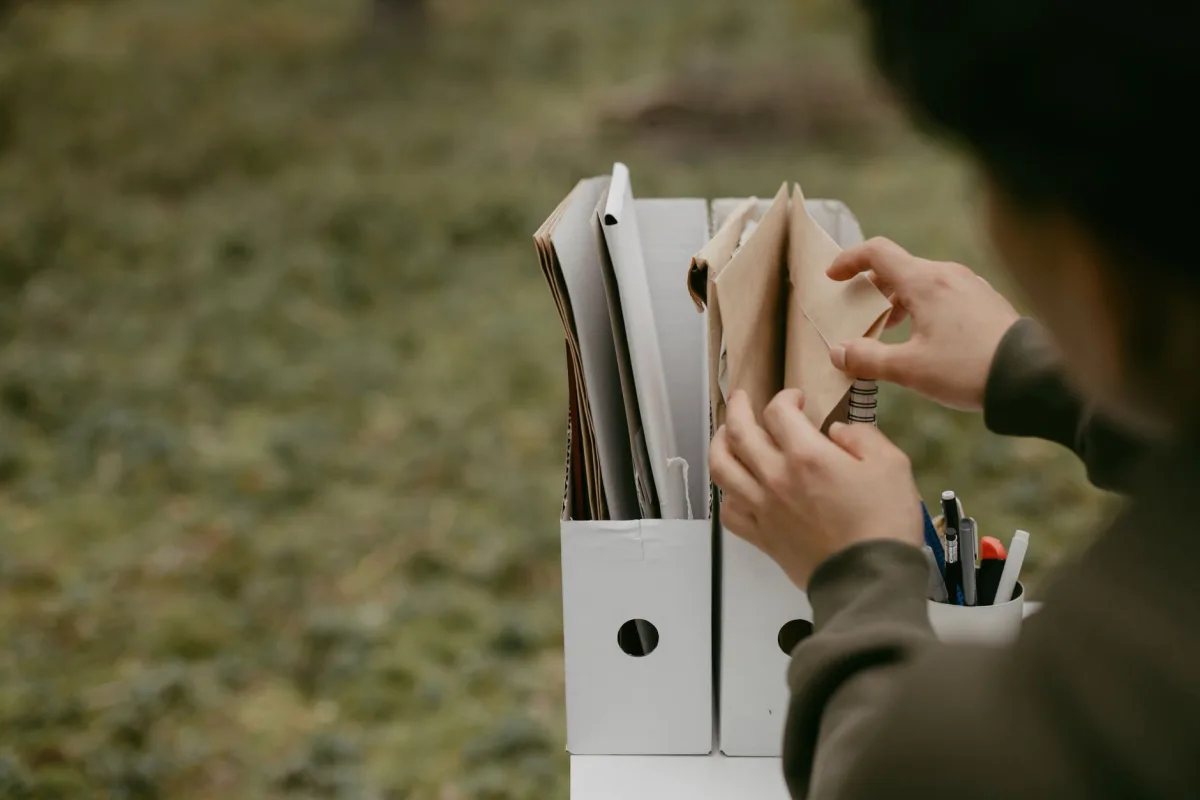
- Pick one home base. Choose either a physical folder or a phone app, then commit to it. Split records get lost.
- Create a tank map. Sketch the tank, lids, and drain field with measurements from two fixed points like the house corner and a fence post.
- Log the basics. Write tank size, number of compartments, install year, and system type at the top so it’s always visible.
- Add every past service you can confirm. Even approximate dates (“pumped around 2021”) are better than blank.
- Set a recurring reminder. Put the next inspection and pump-out dates in your phone calendar with an alert.
- Make one backup. Photograph the paper log or export the digital file to cloud storage so a fire or flood can’t erase it.
If your county keeps septic permits on file, request a copy of your original permit and site drawing while you’re at it. It often lists the exact tank size and drain field dimensions, which saves you from measuring or guessing later.
Paper, spreadsheet, or app?
All three work. The best one is the one you’ll keep updating. Here’s how the common options compare so you can pick without overthinking it.
| Method | Best for | Watch out for |
|---|---|---|
| Paper folder | Owners who want it near the tank map; easy to hand to a buyer | Can be lost, damaged, or forgotten during a move |
| Spreadsheet | Owners who like sortable dates and cost totals | Needs a backup copy in the cloud |
| Notes/reminder app | Owners who live on their phone; auto-timestamps photos | Export it before switching phones or accounts |
Note: Keep a copy where the buyer will look
Store a printed copy of your log with your other home documents, not just on your phone. When you sell, the buyer’s agent and inspector will expect a physical paper trail, and a ready folder signals a well-kept system before anyone lifts a lid.
Using Your Records to Make Smarter Decisions
A log is only worth the minutes you spend reviewing it. Once a year, ideally right after a pump-out, read back through your entries and look for patterns. This is where the notes turn into savings.
Compare your sludge depths year over year. If solids are filling the tank faster than before, something changed, maybe a new garbage disposal, more people in the house, or more laundry. That’s a cue to adjust habits or shorten the interval. If depths are stable and low, you may be able to stretch the schedule slightly and save on a pump-out.
Your records also help you supplement professional visits with your own checks. Learning how to inspect a septic system yourself between service calls lets you jot quick observations, like a slow drain or a faint odor, into the same log so the pro has context at the next visit.
What my own log caught
On my own system, my notes showed scum depth creeping up two years running while sludge stayed flat. That pattern pointed to grease, not solids. I traced it to cooking oil going down the kitchen sink, changed the habit, and the next inspection showed the scum layer had leveled off. Without the written comparison, I’d never have spotted a slow trend hiding inside “normal.”
For the bigger picture on how these records fit into overall care, our complete septic system maintenance guide ties pumping, inspection, and water habits together. You can also browse every routine-care article in the septic maintenance section.
Frequently Asked Questions
What should a septic maintenance log include?
At minimum, record the service date, the company name, the type of service, the sludge and scum depths measured, the work performed, and the cost. Add your tank size, install year, and a next-service reminder date. Those fields let you track trends and prove the system’s history to a future buyer.
How long should I keep septic service records?
Keep them for the entire time you own the home, and hand them to the next owner at closing. Septic systems last decades, so a record from ten years ago still helps predict wear. There’s no downside to keeping old receipts, and a long history is exactly what buyers and inspectors want to see.
Do septic records really help when selling a house?
Yes. Buyers and their inspectors often flag an unknown maintenance history as a risk, which becomes a reason to lower their offer. A clear folder of pumping receipts and inspection notes removes that uncertainty, keeps negotiations smoother, and can prevent last-minute delays in closing the sale.
Where can I find my septic system’s original records?
Start with your county or local health department, which usually keeps the original permit and site drawing on file. Check the closing documents from when you bought the home, and ask the previous owner or their agent. Past pumping companies may also have service records tied to your address.
What if I have no maintenance history at all?
Start fresh today. Schedule an inspection and pump-out, and treat that first visit as your baseline entry with measured sludge and scum depths. From there, every future record builds on it. Partial or estimated past dates are fine to note; the important thing is beginning a real log now rather than waiting.
Conclusion
A septic maintenance log is the rare home project that costs almost nothing and pays back for years. It keeps your pumping on schedule, flags slow trends before they become backups, and hands a future buyer the proof they’ll ask for anyway. Start with whatever you can dig up today, add one line after every service, and back it up somewhere safe. When you’re ready to build out the rest of your routine, our complete septic maintenance guide walks through the habits that keep a system healthy for the long haul.