
A neighbor once told me he pumps his septic tank every single year “just to be safe,” while another swore he’d never had it pumped at all because “the inspector said it looked fine.” Both were half right and half confused, because they’d mixed up two completely different services. After more than a decade running my own system, I’ve learned that knowing when to inspect versus when to pump is one of the cheapest ways to protect a system that can cost thousands to repair. In this article you’ll learn exactly what each service does, how they differ, and how to schedule the right one at the right time.
Key Takeaways
- An inspection checks the health of your system; pumping physically removes built-up solids from the tank.
- The EPA suggests inspecting a conventional system roughly every 3 years and pumping every 3 to 5 years, depending on tank size and household.
- An inspection often tells you whether you need to pump yet, so many owners inspect first and pump on evidence.
- A pro pump-out usually runs about $300 to $600; a basic inspection is far cheaper and can save you from a $20,000 drain field.
- Never skip inspections just because you pump on schedule, they catch problems pumping can’t.
Let’s start by clearing up what each service actually is, because once the difference clicks, deciding what to schedule gets a lot easier.
Inspection vs Pumping: What’s the Difference?
These two services get confused constantly, partly because the same company often does both in one visit. But they answer different questions. An inspection asks, “Is this system healthy and how full is the tank?” Pumping answers, “Let’s empty the solids so the tank can keep working.” One is diagnosis; the other is treatment.
What a Septic Inspection Involves
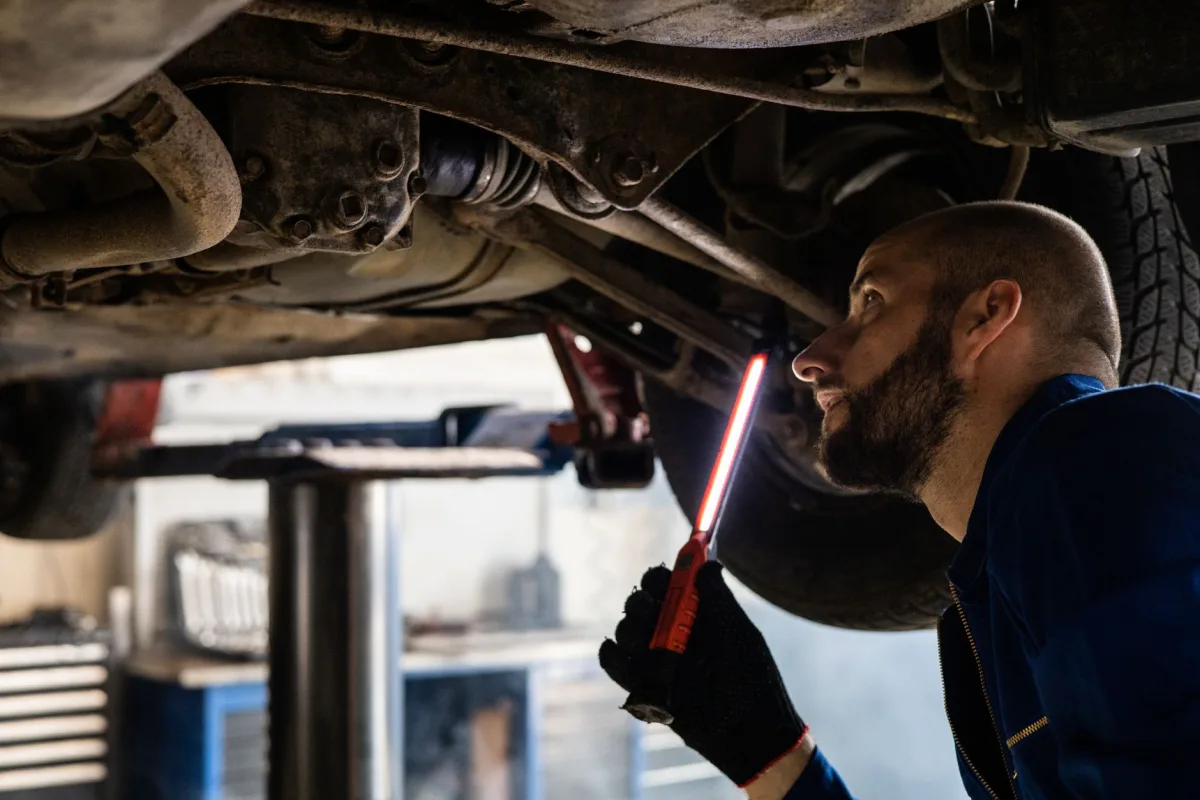
During an inspection, a technician opens the tank lids and checks the sludge and scum layers, looks at the baffles and effluent filter, and confirms liquid is flowing to the drain field the way it should. On a fuller inspection they may run water to watch how the system handles flow, and check for signs of surfacing effluent in the yard.
The key output is a measurement: how deep the solids have built up. That single number tells you whether pumping is due now, or whether you can safely wait another year or two. If you want to do a rough version of this yourself between visits, our guide on how to inspect a septic system yourself walks through what an owner can safely check.
What Septic Pumping Involves
Pumping is the physical removal of the accumulated sludge and scum from the tank. A truck backs up, a large hose goes into the tank through an access lid, and a vacuum pulls out everything that has settled and floated over the years. It’s the only thing that actually removes the solids your tank can’t break down on its own.
No additive, habit, or bacteria packet replaces this. Solids accumulate no matter how careful you are, and once the tank fills past roughly a third of its volume with solids, they start escaping to the drain field, which is where the expensive damage begins.
Side-by-Side Comparison
Here’s the quickest way to see how the two services stack up. I put this together from what I’ve paid over the years and what health departments and the EPA recommend for a typical conventional system.
| Factor | Inspection | Pumping |
|---|---|---|
| What it does | Checks system health, measures solids | Removes solids from the tank |
| Typical frequency | About every 1 to 3 years | About every 3 to 5 years |
| Typical cost | Often free with pumping to ~$300 standalone | Roughly $300 to $600 |
| Main purpose | Diagnosis and early warning | Maintenance and prevention |
| Tells you if pumping is due | Yes | No (it just does it) |
The takeaway from the table is that these aren’t competing choices, they’re partners. Inspection is the cheap, frequent checkup; pumping is the periodic reset. Most well-run systems get both on a sensible rhythm.
When Do You Need an Inspection?
Inspections are the low-cost early-warning system, so err on the side of doing them more often. The EPA’s SepticSmart program generally suggests having a conventional system inspected about every three years, and more often for systems with pumps, alarms, or aerobic treatment units.
- Before you buy a home on septic, so you know what you’re inheriting.
- Every 1 to 3 years for a conventional system as routine upkeep.
- Annually or more if you have an ATU, pump, or mechanical parts.
- After warning signs like slow drains, odors, or wet spots over the tank or field.
- When you’re unsure if pumping is due, an inspection settles it with a measurement instead of a guess.
Inspect first, pump on evidence
If you’re on the fence about pumping, book an inspection first. The sludge measurement tells you whether to pump now or wait. That habit alone has saved me from at least one unnecessary pump-out and prevented me from stretching another one too far.
When Do You Need Pumping?
Pumping is driven by how fast solids build up, which depends on your tank size and how many people use the system. A common guideline is every three to five years, but the honest answer is “when the solids reach about a third of the tank.” That’s why the two services work best together.
A smaller tank serving a big household fills faster and may need pumping closer to every two to three years. A couple on a 1,500-gallon tank might safely go five. To match an interval to your own tank size and household, our guide on how often you should pump a septic tank breaks the math down step by step.
You should also pump promptly if an inspection finds the solids near that one-third mark, or if you notice classic late-stage warning signs: gurgling drains, sewage odors indoors, or standing water over the tank. Waiting past those signals risks pushing solids into the drain field.
How to Decide What to Schedule
If you’re not sure which service to book, walk through these steps. They’ll steer you to the right call almost every time without overspending.
- Check your records first. Find the date of your last pump-out. If it’s been under three years and nothing seems wrong, you likely just need an inspection.
- Look for warning signs. Slow drains, odors, or soggy ground mean call a pro now, not on a calendar.
- If unsure, inspect. A cheap inspection with a sludge measurement removes the guesswork about pumping.
- Pump on evidence or schedule. Pump if solids are near a third of the tank, or if you’ve simply hit your normal 3-to-5-year interval.
- Log the result. Write down the date, the solids depth, and any notes so next time is an informed decision, not a guess.
Here’s a real example from my own system. My last inspection came at year two and a half on a 1,000-gallon tank with three people in the house. The tech measured solids at about a quarter of the tank, so we skipped pumping and rechecked a year later, when it had reached a third and we pumped for around $410. That single $0-add-on inspection saved a full pumping cycle’s cost by timing it right. For the full routine these fit into, our complete septic system maintenance guide ties inspection, pumping, and water habits together.
Frequently Asked Questions
Is a septic inspection the same as pumping?
No. An inspection checks your system’s health and measures how full the tank is, while pumping physically removes the built-up solids. They’re often done in the same visit, which is why people confuse them, but an inspection is diagnosis and pumping is the actual maintenance that empties the tank.
Do I need to pump every time I get an inspection?
No. That’s the whole point of inspecting first. The technician measures your sludge and scum depth, and if solids are well below about a third of the tank, you can safely wait. Many owners inspect on a shorter cycle and only pump when the measurement shows it’s actually needed.
How much does a septic inspection cost compared to pumping?
A basic inspection is often free or discounted when bundled with pumping, or roughly up to $300 on its own for a detailed one. Pumping typically runs about $300 to $600, depending on tank size and location. Both are minor next to a failed drain field, which can cost several thousand to $20,000 or more.
How often should each service happen?
The EPA generally suggests inspecting a conventional system about every three years and pumping every three to five years, though this varies with tank size and household. Systems with pumps or aerobic units usually need annual inspection. Let your tank size, number of people, and inspection results fine-tune the exact timing.
Can I inspect my own septic system instead of paying a pro?
You can do a helpful between-visits check, looking for odors, wet spots, slow drains, and lifting the lid to eyeball the tank if it’s safe to reach. But never enter a tank; the gases are deadly. A professional measurement of sludge depth is still the reliable way to know whether pumping is due.
Conclusion
The simplest way to think about it: inspection tells you what your system needs, and pumping delivers it. Inspect often because it’s cheap and catches trouble early, and pump on a sensible interval or when a measurement says it’s time. Do both on a rhythm and you’ll spend a little now to avoid a very large bill later. If you’d like a full game plan to follow, explore our septic maintenance resources and build the routine that keeps your system running for decades.