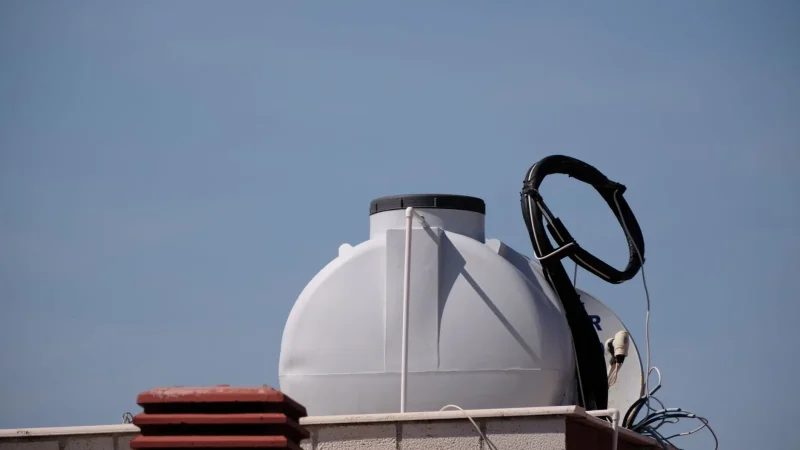

The first time a buyer asked me what size septic tank their new home needed, they expected a number pulled from thin air. It does not work that way. Tank capacity follows a short set of rules tied mostly to how many bedrooms a house has, with a few adjustments for how a family actually lives. Get the size right and the tank does its quiet job for decades. Get it too small and you are pumping constantly and pushing solids toward the drain field. Here is how the sizing really works.
Key takeaways
- Septic tanks are sized by bedroom count because bedrooms stand in for how many people a home can hold.
- Most homes land between 1,000 and 1,500 gallons, and 1,000 gallons is the legal minimum in many states.
- A rough guide: 3 bedrooms needs about 1,000 gallons, 4 bedrooms about 1,200, and 5-6 bedrooms about 1,500.
- A garbage disposal, extra high-flow fixtures, or a home business can push you up to the next size.
- Your local health department has the final word, so confirm the required size before you buy or replace a tank.
Why is a septic tank sized by bedrooms, not by people?
This trips up almost every homeowner I talk to. You would think the number of people in the house should drive the size, and in a sense it does. The trouble is that people move. Codes need a rule that survives a change of owners, so they use the one thing about a house that does not walk out the door: its bedrooms.
Regulators assume roughly two people per bedroom. A three-bedroom house is sized as though six people could live there, even if a single couple owns it today. That built-in cushion protects the next family who might fill every room. It also explains why your tank can feel oversized for your current household, which is by design rather than by accident.
Bedroom count is a proxy for wastewater flow, and flow is what the tank has to manage. If you want the wider picture of how that flow moves from house to tank to soil, our primer on how a septic system works walks through each stage in plain language.
What size septic tank do I need for my home?
Here is the chart I keep coming back to. These are common minimums used across many state codes, so treat them as a starting point rather than a promise. Your county may require a size up from what you see here.
| Bedrooms | Typical home size | Minimum tank capacity | Estimated daily flow |
|---|---|---|---|
| 1-2 bedrooms | Under 1,500 sq ft | 750-1,000 gallons | 120-240 gallons |
| 3 bedrooms | 1,500-2,500 sq ft | 1,000 gallons | 300-360 gallons |
| 4 bedrooms | 2,500-3,500 sq ft | 1,200 gallons | 400-480 gallons |
| 5-6 bedrooms | 3,500-4,500 sq ft | 1,500 gallons | 500-720 gallons |
Notice that many small homes still land at 1,000 gallons. Even a one-bedroom cabin often has to meet that minimum, because a tank smaller than 1,000 gallons gives solids too little time to settle. That settling time is the whole point of the tank, so codes rarely allow anything tighter.
The kind of system you install also interacts with tank size. Some advanced treatment setups pair the tank with extra components, and a look at the main types of septic systems shows where a standard tank fits and where a larger or second tank comes into play.
How much wastewater does a household actually make?
The average person sends between 50 and 100 gallons of water down the drain every day. Showers, laundry, dishes, and every flush add up faster than most people guess. A family of four can easily push 300 gallons on a normal day and far more on a laundry-heavy weekend.
Your tank is not meant to hold all of that at once. It is sized to keep about two days of flow inside at any given time. Those two days give heavy solids a chance to sink into the sludge layer and grease a chance to rise into the scum layer, so the water leaving for the drain field is as clean as the tank can make it.
Get the size wrong on the small side and that retention time shrinks. Water rushes through before solids can settle, and those solids travel out to the field where they clog the soil. That is the quiet damage an undersized tank does, and it is a big reason septic sizing exists in the first place. The EPA overview of how a septic system works explains this settling process well if you want the official version.
What else changes the size you need?
Bedroom count sets the baseline, but a handful of household habits and features can push you up a size. If two or three of these apply to you, plan on the larger tank rather than the minimum.
- A garbage disposal. Heavy disposal use can add roughly 50 percent more solids to the tank, which many codes answer by requiring the next size up.
- High-flow fixtures. A jetted tub, a rain-shower head, or an older high-volume toilet all raise your peak flow beyond the average.
- A large or growing family. If you regularly host guests or run a full house, the two-people-per-bedroom assumption may undershoot your real load.
- A home business. A daycare, salon, or shop that adds people and water use during the day can outstrip a residential-sized tank.
- Future additions. If you plan to finish a basement bedroom or add on, sizing for that now is far cheaper than replacing a tank later.
None of these is a reason to panic-buy the biggest tank on the lot. They are simply flags that your flow may run higher than the chart assumes. A short conversation with your installer about how you actually live sorts it out quickly.
How can I tell what size tank I already have?
If your home already has a tank, you often do not need to guess. Work through these in order and one of them almost always gives you the answer.
- Check your records. The original septic permit or the as-built drawing on file with your county health department lists the tank size directly.
- Read a pumping receipt. Most pumpers note the capacity they serviced, so an old invoice can hand you the number for free.
- Look for a stamp. Many concrete and plastic tanks carry the gallon rating molded or printed near the lid or on the end wall.
- Measure it. For a rectangular tank, multiply length by width by liquid depth in feet, then multiply by 7.48 to get gallons.
- Match the footprint. A typical 1,000-gallon concrete tank runs about 5 feet wide by 8 feet long, while a 1,500-gallon tank is noticeably longer.
Knowing your capacity is not just trivia. It sets your pumping schedule, tells you whether an addition is realistic, and matters at resale. If you are weighing whether an aging tank is worth keeping, our guide to how long a septic system lasts helps you judge where yours sits in its life.
Is a bigger septic tank always the safer bet?
Up to a point, extra capacity is genuinely helpful. It stretches the time between pumpings and gives you a buffer on busy days. Going one size above the minimum for a growing family is usually money well spent.
Go much bigger than your flow, though, and the benefit fades. A tank that rarely fills can let water sit so long that the bacterial balance drifts, and you are still paying more upfront for concrete you do not use. The material you choose factors in here too, since a larger concrete tank needs heavier equipment to set than a plastic one. Our comparison of concrete versus plastic septic tanks covers how size and material play off each other.
The sweet spot is matching the tank to your real household with a modest cushion, not chasing the largest number you can fit in the hole. Right-sizing beats oversizing almost every time.
Ray’s field tip
Before you ever call an installer, write down two things: your bedroom count and whether you run a garbage disposal. On my own system, that single pairing predicted the size the county required almost to the gallon. It turned a vague quote into a specific one and gave me a fast way to check whether a contractor was steering me toward a tank bigger than my home actually needed. Two facts on a sticky note can save you a few hundred dollars.


Frequently Asked Questions
What size septic tank do I need for a 3-bedroom house?
A three-bedroom home almost always needs a 1,000-gallon tank as the baseline. That size assumes up to six people and handles the daily flow a house that size produces. If you have a garbage disposal or plan to add a bedroom, many counties will require a 1,200-gallon tank instead, so confirm the exact figure with your local health department before you buy.
Can two people live comfortably with a 1,000-gallon tank?
Yes, and comfortably so. A 1,000-gallon tank is sized for a three-bedroom household, so two people put far less load on it than the code assumes. You will likely stretch your pumping interval toward the longer end of the three-to-five-year range, as long as you keep an eye on the solids level and avoid overloading the system on any single day.
Does a garbage disposal mean I need a bigger septic tank?
Often, yes. Regular disposal use can add roughly 50 percent more solids to the tank, which shortens the time before pumping and crowds the settling space. Many codes respond by requiring the next size up, or by asking for a larger effluent filter and a more frequent pumping schedule. If you rely on a disposal daily, size for it from the start.
What is the smallest septic tank allowed?
In most states the practical floor is 1,000 gallons for a new home, even a one or two-bedroom one. A few jurisdictions permit 750-gallon tanks for very small dwellings, but they are increasingly rare. The reason is retention time: a tank under 1,000 gallons gives solids too little chance to settle, so codes have drifted toward 1,000 gallons as the standard minimum.
Will a bigger tank let me pump less often?
Somewhat, but not as much as people hope. A larger tank holds more sludge before it needs emptying, so the interval does stretch. The bigger driver is how many people use the system and how much water they send through it. A modestly larger tank plus careful water habits will always beat an oversized tank paired with heavy daily use.
Match the tank to your home, then confirm it
Sizing a septic tank is far less mysterious than it first looks. Start with your bedroom count, find your row on the chart, and nudge up a size if a garbage disposal, high-flow fixtures, or a full house apply to you. Then do the one step people skip: call your county health department and confirm the number before any concrete gets poured. That quick check keeps you from buying a tank that is too small to protect your drain field or too large to run efficiently. For more plain-language help with the fundamentals of your system, browse the rest of our septic basics archive.