My own kitchen ran on a septic tank for years before I ever thought hard about the disposal under the sink. I used it the way most people do, as a quick way to make food scraps disappear. Then I started pumping tanks for a living and saw what that habit does to the sludge layer. A garbage disposal and a septic system can share a house, but only if you treat the disposal as a light-duty helper and not a wood chipper for last night’s dinner.
These are the mistakes I run into most on service calls, and the small habits that undo each one.
Key takeaways
- A disposal does not make food disappear; it grinds scraps fine and sends them straight to your tank, where they pile onto the sludge layer.
- Heavy disposal use can cut the time between pump-outs by a third or more, so the real cost shows up as extra service visits.
- Grease, fibrous vegetables, and starchy foods are the worst things to grind on a septic system, because they resist breakdown and feed clogs.
- Run plenty of cold water before, during, and after grinding, and keep every load small.
- No additive or enzyme fixes an overloaded tank; the only real cure is putting less down the drain.
What a garbage disposal really does to a septic tank
A disposal does not destroy food. It shreds it into small particles that flow out with your dishwater and land in the first compartment of your tank. The heavy bits settle to the bottom as sludge, the greasy bits float to the top as scum, and only a thin middle layer of clearer liquid moves on toward the drain field.
Your tank bacteria do break some of that food down, but they work slowly, and ground food breaks down far slower than the toilet paper and body waste a tank is designed around. So the sludge layer climbs faster than it should. A full sludge layer is what forces a pump-out, and if it climbs high enough, solids start slipping into the drain field where they clog the soil for good.
This is not a fringe worry. The EPA’s septic guidance notes that a kitchen disposal can meaningfully raise the amount of solids that build up in a tank, which is why homes that grind a lot of food often need pumping a third to a half sooner than homes that do not. Here is what that extra load looks like in practice.
- Ground food raises the sludge layer faster, shortening the years between pump-outs.
- Grease from scraps thickens the scum layer, which can eventually reach the outlet and wash toward the field.
- Fine particles stay suspended longer, so more of them escape the tank and reach the drain field lines.
- A heavier organic load can crowd the bacteria and slow the natural treatment your tank depends on.
Mistake 1: Treating the disposal like a second trash can
The most common mistake is also the simplest: scraping every plate into the sink and grinding it away. On city sewer that habit is only a little wasteful. On septic, every scrap you grind is a scrap your tank has to store until the next pump-out.
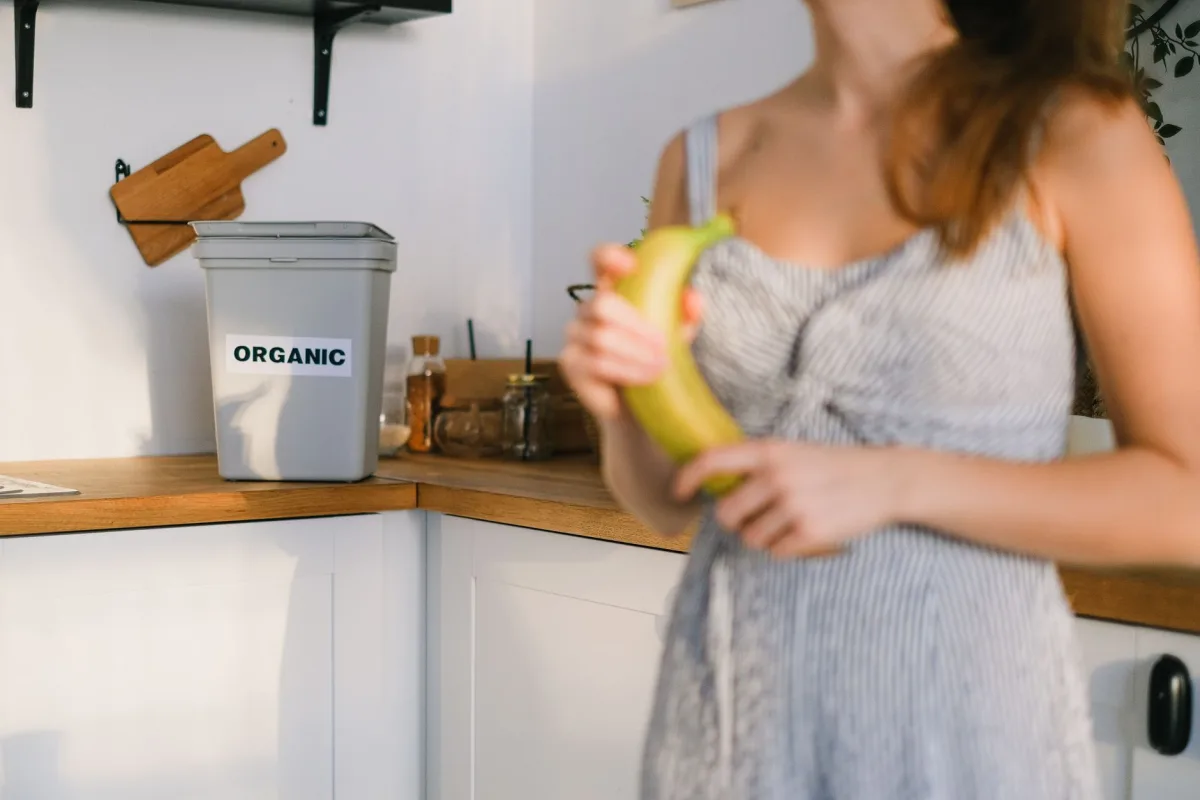
The fix: Scrape plates into the compost bin or the trash first, then use the disposal only for the small bits that rinse off on their own. Think of it as a strainer cleaner, not a food processor. A lidded countertop pail makes the switch painless, and it keeps pounds of solids out of your tank every week.
Mistake 2: Grinding fats, oils, and grease
Bacon fat, pan drippings, salad dressing, and the last of the fryer oil all seem harmless when they are warm and liquid. They do not stay that way. Once they cool in your tank, they harden into the scum layer and cling to the walls, the baffles, and the outlet.
Grease is the single biggest cause of the clogs and backups I get called out for, and a disposal does nothing to break it down. Chopping a grease clog into smaller pieces just spreads the problem further.
The fix: Pour cooled grease into an old can or jar and throw it in the trash. Wipe greasy pans with a paper towel before they ever reach the sink. This is one of the same rules that governs what should never go down a septic drain anywhere in the house, disposal or not.
Mistake 3: Grinding without enough water
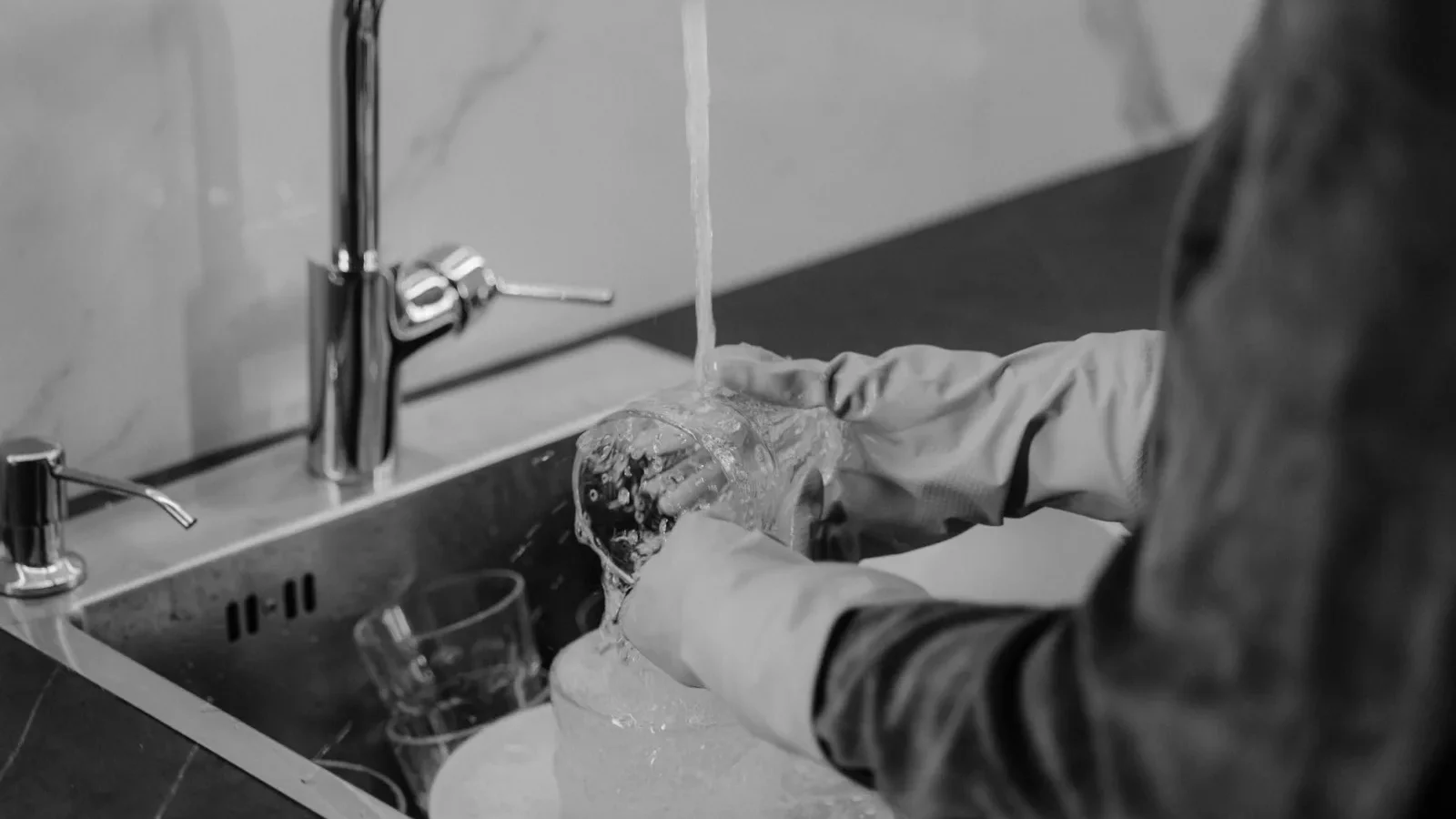
A lot of people flick the disposal on, grind, and shut it off before the water has a chance to carry anything anywhere. Ground food with too little water settles in the pipe between your sink and the tank, and it sits in the top of the tank as a thick slurry instead of spreading out.
The fix: Run a steady stream of cold water for a few seconds before you grind, keep it running the whole time, and let it flow for fifteen to twenty seconds after the last of the food clears. Cold water, not hot, because cold keeps any fat solid so it moves along rather than coating the pipe.
Mistake 4: Feeding it fibrous and starchy foods
Some foods punish both the machine and the tank. Fibrous scraps like celery, corn husks, artichokes, and onion skins wrap into stringy mats. Starchy foods like potato peels, rice, and pasta swell and turn to paste. Neither breaks down easily once it reaches the tank.
The fix: Keep those foods out of the disposal entirely and send them to the compost or trash. Coffee grounds and eggshells belong on that list too, since they sink fast and add straight to the sludge. I cover the full lineup in the table further down.
Mistake 5: Never adjusting your pumping schedule
Homeowners who run a disposal hard but stick to the pumping interval a neighbor without one uses are asking for a backup. The extra solids do not care about your calendar. If your tank fills faster, it needs service sooner, full stop.
The fix: If you use a disposal daily, shorten your pump-out interval by a year or so and have the tank inspected on the early side. A pro can measure the sludge and scum layers and tell you exactly how fast yours is filling. Skipping that check is one of the more expensive common septic maintenance mistakes, because a backup costs far more than a routine pump-out.
Mistake 6: Leaning on additives to handle the load
There is a whole shelf of products that promise to let your tank “digest” everything you throw at it. Pour in the packet, the marketing says, and grind away. I have opened plenty of tanks that were dosed monthly and still packed with sludge.
The fix: Skip the additives and manage the input instead. A healthy tank already grows all the bacteria it needs from your normal waste. No enzyme powder speeds up digestion enough to offset a disposal running three times a day, and some additives actually stir up the settled layers so solids drift toward the field.
Mistake 7: Ignoring an older or undersized system
A disposal is hardest on the systems least able to take it: small tanks, aging drain fields, and homes where the tank was sized before a disposal was ever installed. If your system is already near the end of its life, heavy grinding can be the push that tips it over.
The fix: Know your tank size and its condition before you rely on a disposal. On a tank under about 1,000 gallons, or a field showing any early trouble, I tell owners to treat the disposal as an occasional tool at most, or to leave it unplugged and lean on composting instead.
Foods to keep out of a disposal on septic
If you remember nothing else, remember which scraps do the most damage. I sort them into two buckets: the ones that should never go in, and the ones that are fine in truly small amounts with plenty of water.
Worst offenders
- Fats, oils, and grease of any kind, including salad dressing and dairy sludge from the pan.
- Coffee grounds and tea leaves, which sink fast and build sludge.
- Eggshells and bones, which grind into gritty particles that never break down.
- Starchy foods like potato peels, rice, and pasta that swell into paste.
- Fibrous scraps like celery, corn husks, onion skins, and artichoke leaves.
Usually fine in small amounts
- Soft cooked vegetables and small bits of fruit flesh, rinsed through with cold water.
- The stray crumbs and residue that come off a rinsed plate before it hits the dishwasher.
- Small amounts of soft leftovers when composting truly is not an option that day.
To see how much a disposal changes your service schedule, compare a home that grinds daily against one that barely uses the switch. These figures are a rough guide for a standard tank, not a promise, since soil, tank size, and habits all shift the numbers.
| Household size | Light or no disposal use | Heavy daily disposal use |
|---|---|---|
| 1-2 people | Pump every 4-6 years | Pump every 3-4 years |
| 3-4 people | Pump every 3-4 years | Pump every 2-3 years |
| 5 or more people | Pump every 2-3 years | Pump every 1-2 years |
Ray’s field tip
On my own system I keep a small stainless pail next to the sink and empty it into the compost every couple of days. The disposal still lives under there, but it only runs for the odds and ends that slip past the strainer. That one habit stretched my pump-out interval from about three years to nearly five. It is the same small-habit thinking that goes into a good septic checklist before vacation: a few seconds of prevention now saves a very bad day later.
Frequently Asked Questions
Can I have a garbage disposal with a septic system at all?
Yes, a garbage disposal and a septic system can work together, as long as you use the disposal lightly and pump the tank more often to match. The problem is never the disposal itself, it is the volume of food solids people send through it. Treat it as an occasional tool for the scraps that rinse off on their own, and your tank handles it fine.
How much sooner will I need to pump the tank if I use a disposal?
Plan on pumping roughly a third to a half sooner than a similar home without one, if you grind food most days. A family that might otherwise pump every four years could find themselves closer to every two or three. The only accurate way to know is to have the sludge and scum layers measured at your next inspection.
Are “septic safe” garbage disposals actually better for a tank?
A little. Some models grind food finer or come bundled with an enzyme injector, which helps the particles move through the pipe. What they cannot change is the amount of solid material you add to the tank. A finer grind still lands in the sludge layer. Septic safe garbage disposal use comes down to habits far more than the brand on the unit.
What foods should never go down a disposal on septic?
Keep out all fats, oils, and grease, plus coffee grounds, eggshells, bones, and anything starchy or fibrous like potato peels, rice, pasta, celery, and corn husks. These either refuse to break down or turn into paste and clogs. When in doubt, compost it or bin it rather than risk a disposal harming septic health over time.
Do enzyme additives let me use the disposal more freely?
No. Additives cannot digest solids fast enough to offset heavy grinding, and a healthy tank already grows the bacteria it needs. Some products even disturb the settled layers and push solids toward the drain field. Save your money and manage what goes in the sink instead, which is the only step that reliably protects the system.
Keep the disposal, change the habit
You do not have to rip the disposal out to protect your septic system. You just have to stop asking it to swallow meals it was never meant to handle. Scrape plates first, keep grease and fibrous scraps out, run cold water every time, and shorten your pumping interval to match how much you grind. Do that, and the unit under your sink stays a convenience instead of a slow drain on your tank. For the full routine that keeps everything running well, read our complete septic maintenance guide or browse the rest of the maintenance archive.