Pop the lid on your septic setup and it can look like a random collection of pipes, boxes, and buried tanks. But every one of those parts has a specific job, and when you know what each does, a “mysterious” system in the backyard becomes something you can actually reason about. I remember standing over my own tank the first year, unable to tell a baffle from an outlet pipe. Once someone walked me through the pieces, the whole thing clicked.
In this guide you’ll get a plain-English tour of the seven key septic system components, what each one does, and why it matters when something goes wrong.
Key Takeaways
- A conventional septic system has 7 main components: the inlet pipe, tank, baffles, effluent filter, distribution box, drain field, and the surrounding soil.
- The septic tank (usually 1,000-1,500 gallons) separates and partly digests waste; it does not “flush” anything away.
- The distribution box (D-box) is a small part with an outsized job: splitting flow evenly across the drain field.
- An effluent filter is a cheap upgrade (often under $100) that protects your far more expensive drain field.
- Most components are low-tech and long-lasting; the drain field is the part you most want to protect.
The Big Picture: How the Components Connect
Before we go part by part, it helps to picture the path water takes. Wastewater leaves your house through one pipe, enters the tank, gets separated and partly treated, passes through a filter, flows to a box that divides it up, spreads across a network of buried pipes, and finally soaks into the soil where treatment finishes. Each component hands off to the next in a simple gravity-fed chain.
That chain is the same across most conventional systems. Alternative designs add pumps, extra tanks, or aeration, but the core logic holds. If you want the full journey from toilet to soil, our pillar guide on how septic systems work start to finish maps every stage in order. Below, we’ll zoom in on the seven pieces that make it happen.
The 7 Key Septic System Components
1. The Inlet Pipe (Main Sewer Line)
This is the single pipe that carries everything from your home’s drains out to the tank. Every toilet, sink, shower, and washing machine ties into it. It’s usually 4-inch pipe sloped just enough (about a quarter inch per foot) so waste flows by gravity without leaving solids behind.
You rarely think about the inlet pipe until it clogs or a tree root sneaks in through a joint. When a whole-house backup happens, this line is one of the first suspects, since it’s the shared path everything travels.
2. The Septic Tank
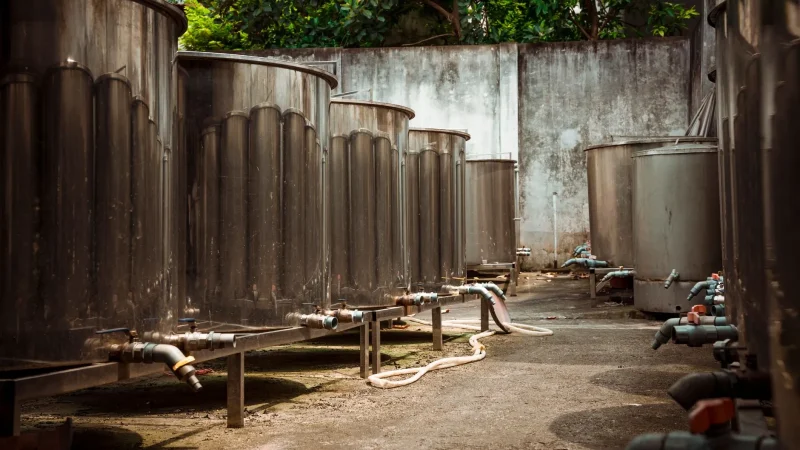
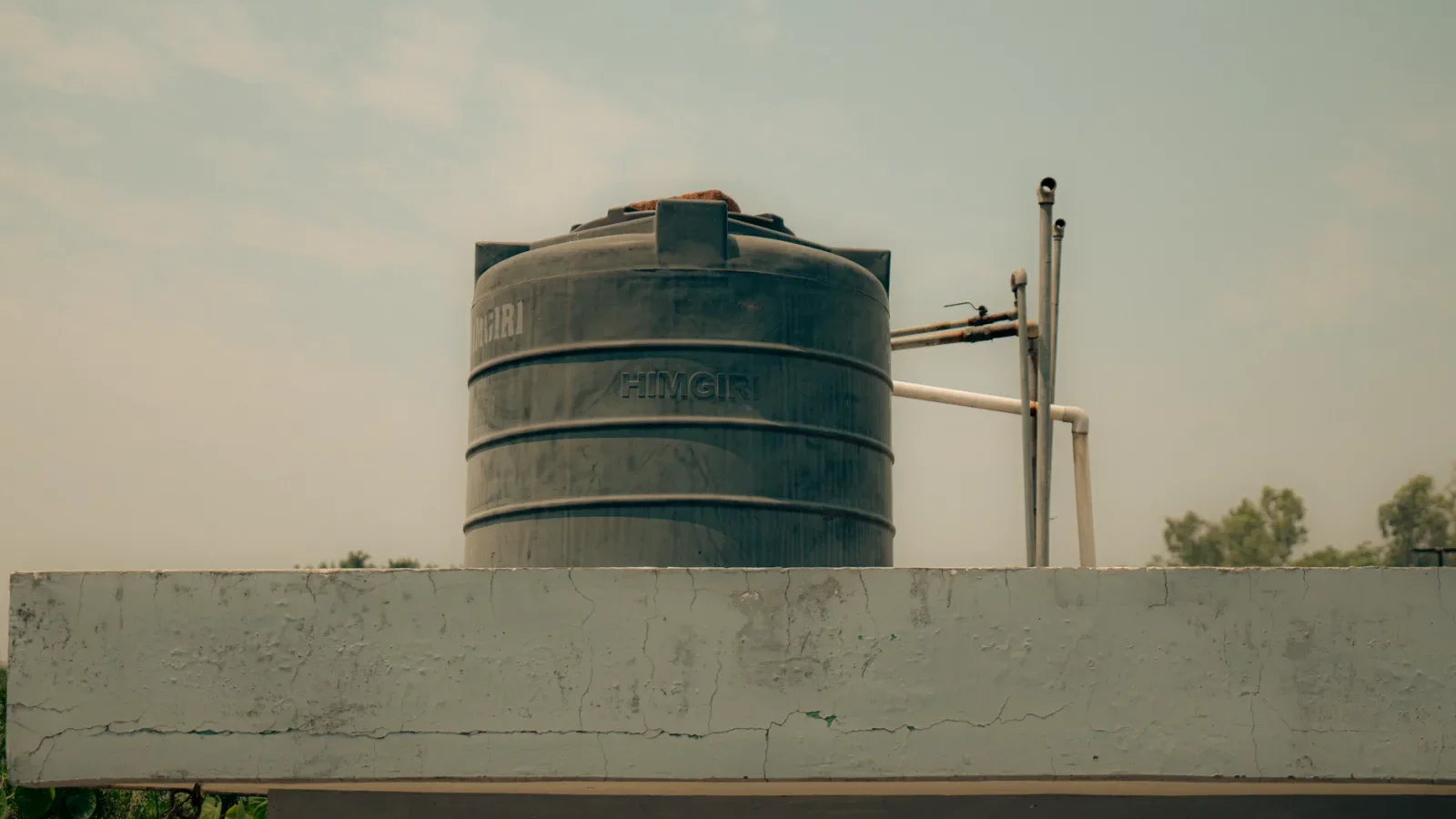
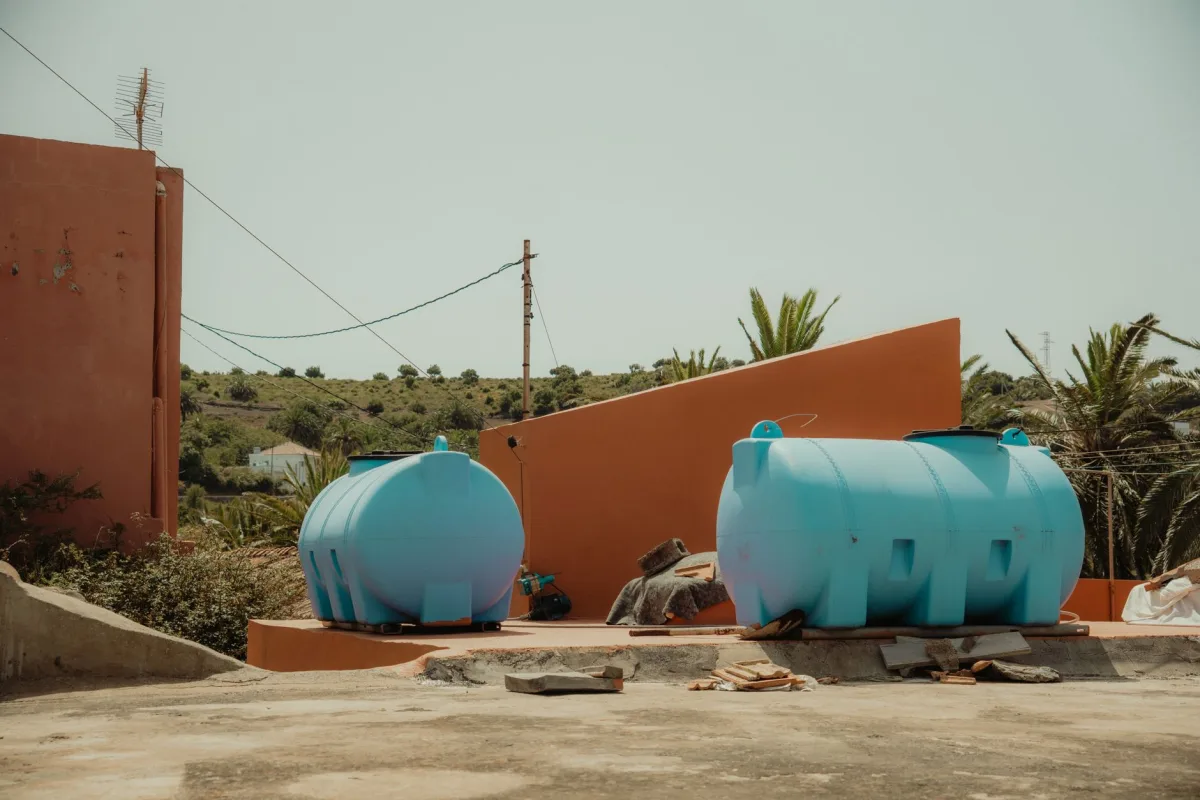
The tank is the heart of the system. It’s a buried, watertight container, typically 1,000 to 1,500 gallons of concrete, fiberglass, or heavy plastic. Its job is to hold wastewater long enough (usually a day or two) for solids to settle and bacteria to start breaking things down.
Inside, waste sorts into three layers: floating scum on top, heavier sludge on the bottom, and relatively clear liquid (effluent) in the middle. Only that middle layer should move on. The bottom sludge is what a pump truck removes every three to five years.
3. The Baffles (Inlet and Outlet)
Baffles are simple barriers inside the tank, one near the inlet and one near the outlet. The inlet baffle directs incoming water downward so it doesn’t stir up settled sludge or push floating scum toward the exit. The outlet baffle blocks scum from escaping and makes sure only the clean middle layer leaves.
They look like nothing, just a piece of concrete, plastic, or a T-shaped fitting. But a broken or corroded baffle is a real problem: scum and solids can slip out and clog your drain field, which is the expensive part to fix. Inspectors always check baffle condition for exactly this reason.
4. The Effluent Filter
Not every older tank has one, but modern systems include an effluent filter that sits in the outlet baffle. It’s a screen that catches smaller solids the settling process misses, giving your drain field one more layer of protection before liquid heads out.
This is my favorite low-cost, high-value part. A filter often costs under $100 installed, and cleaning it (a quick rinse with a hose, usually when the tank is pumped) is one of the cheapest habits you can build. It protects a drain field that can cost several thousand to $20,000 or more to replace.
Tip: Add or upgrade an effluent filter
If your tank doesn’t have an effluent filter, ask your pumper about adding one at your next service. It’s inexpensive, and it dramatically reduces the amount of gunk that can reach and clog your drain field. Just remember it needs an occasional cleaning, or it can slow drains as it fills.
5. The Distribution Box (D-Box)
The distribution box, or D-box, is a small buried box that sits between the tank and the drain field. Effluent flows into it from the tank, and it splits that flow evenly across the multiple pipes (called laterals) that run through your drain field.
It’s a humble part with an outsized job. If a D-box tilts, cracks, or fills with solids, some drain field lines get overloaded while others sit dry. That uneven loading can cause soggy spots over one section of the yard while the rest of the field goes underused. When a drain field fails early, a bad D-box is sometimes the quiet culprit.
6. The Drain Field (Leach Field)
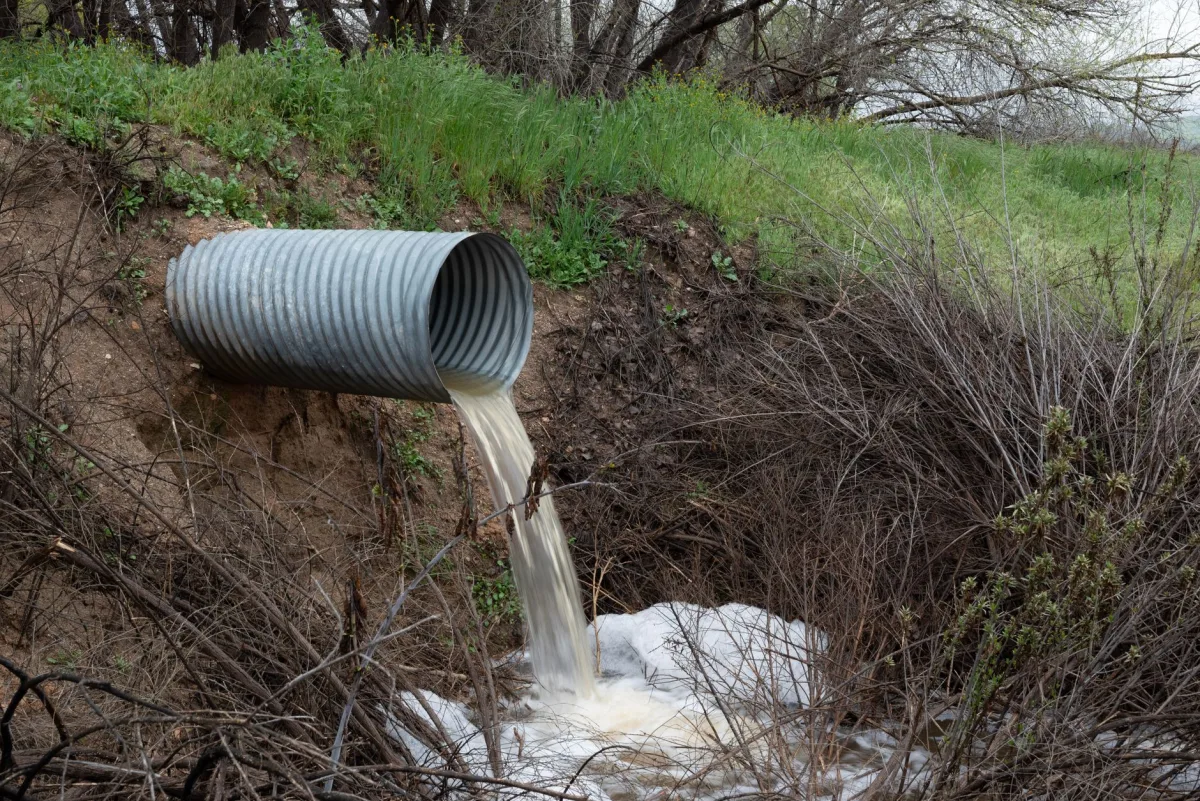
The drain field is where the real cleaning finishes. It’s a network of perforated pipes laid in gravel-filled trenches. Effluent seeps out through the holes, trickles through the gravel and soil, and gets treated by microbes in the ground before it ever reaches groundwater.
This is the most fragile and most expensive component to replace, so it’s the one worth guarding. Keep vehicles, heavy equipment, and deep-rooted trees off it. Don’t cover it with pavement or a shed. And spread out your water use so you never flood it faster than the soil can absorb.
7. The Soil
It’s easy to forget, but the soil beneath your drain field is a working part of the system, not just dirt. Naturally occurring bacteria in the soil do the final polishing, removing pathogens and nutrients before water rejoins the water table.
This is why a “perc test” (percolation test) is required before a system is installed: the ground has to drain at the right speed. Too fast and water passes before it’s cleaned; too slow and it backs up. Your soil type is a big reason some systems are conventional while others need alternative designs.
Components at a Glance
Here’s a quick reference tying each component to its job and the trouble sign to watch for. Treat these as general guidance; your exact setup may vary by system type and local code.
| Component | What It Does | Common Trouble Sign |
|---|---|---|
| Inlet pipe | Carries all wastewater from house to tank | Whole-house slow drains or backup |
| Septic tank | Separates and partly digests waste | Overflow from skipped pumping |
| Baffles | Guide flow, keep scum in the tank | Solids reaching the drain field |
| Effluent filter | Screens out remaining fine solids | Slow drains when it clogs |
| Distribution box | Splits flow evenly to the field | Wet spot over one field section |
| Drain field | Releases effluent into the soil | Soggy ground, odors, backups |
| Soil | Final microbial treatment | Poor perc, surfacing effluent |
Notice how many trouble signs point back to the drain field and soil. That’s not a coincidence. Problems upstream (a bad baffle, a clogged filter, a tilted D-box) often show up as drain field symptoms, because that’s where a struggling system finally gives out.
How Components Differ by System Type
The seven parts above describe a standard gravity-fed conventional system, which is the most common in the US. But your system might have a few extras depending on your site and soil.
- Pump chamber: If your drain field sits uphill or your soil needs dosing, a pump and float switches move effluent instead of relying on gravity.
- Aeration unit: Aerobic treatment units (ATUs) add oxygen to speed up bacterial treatment, often on poor soil sites.
- Second compartment or tank: Some tanks have two chambers, or a separate pump tank, for extra settling.
- Alarm and control panel: Systems with pumps usually include a high-water alarm to warn you before an overflow.
If you’re not sure which category yours falls into, our overview of the common types of septic systems explained helps you identify it. And for the difference in how treatment actually happens, our comparison of aerobic vs anaerobic septic systems covers why some setups need that extra aeration hardware.
Frequently Asked Questions
What are the main parts of a septic system?
A conventional septic system has seven main parts: the inlet pipe from your house, the septic tank, the baffles inside the tank, an effluent filter, a distribution box, the drain field, and the surrounding soil. Some systems add a pump chamber, aeration unit, or alarm depending on the site.
What does a distribution box do in a septic system?
The distribution box, or D-box, sits between the tank and the drain field. It receives effluent from the tank and splits the flow evenly across the multiple pipes running through the field. If it cracks, tilts, or fills with solids, some field lines get overloaded while others stay dry, which can lead to early failure.
What is a septic baffle and why does it matter?
A baffle is a simple barrier inside the tank near the inlet and outlet. The inlet baffle keeps incoming water from stirring up settled solids, and the outlet baffle stops floating scum from escaping to the drain field. A broken baffle lets solids slip out and clog the field, so inspectors always check them.
Do all septic tanks have an effluent filter?
No. Many older tanks were installed without one, though most modern systems include an effluent filter in the outlet. It screens out fine solids that settling misses, protecting the drain field. Filters are inexpensive to add and just need an occasional rinse, usually when the tank is pumped, to keep drains flowing.
Which septic component is the most expensive to replace?
The drain field is by far the costliest, often running several thousand dollars to $20,000 or more depending on size, soil, and local rules. That’s why most other components, from baffles to filters, exist partly to protect it. Routine pumping and careful water use are cheap insurance against a field replacement.
Conclusion
Once you can name the seven components (inlet pipe, tank, baffles, filter, D-box, drain field, and soil) the whole system stops feeling like a black box in your yard. Each part does one clear job, and most of your care effort simply protects the flow from one to the next, especially the drain field at the end. To keep building that confidence, browse the rest of our septic system basics articles and get familiar with the setup you rely on every day. When something seems off, the EPA SepticSmart program is a solid, non-commercial reference too.